





At Akeneo, our approach to segmentation is pretty nuanced and tailored to the individual profiles of our customers. It involves considering several factors, including the complexity of the customer's ecosystem, the number of stakeholders involved, and the scope of their goals.
For example, a large, multinational customer with a complex structure across multiple countries and numerous executive champions requires a different approach compared to a smaller, regional business with a niche focus and perhaps just one executive managing several projects.
Conventional segmentation tactics often default to a premium, high-touch model for enterprise clients based solely on their revenue status.
But determining how to engage with each customer involves assessing their specific needs and capacities. For instance, not every enterprise client will have the bandwidth for in-depth executive business reviews or roadmap presentations.
Recognizing this, we categorize our customers based on several criteria:
- Frequency and depth of engagement they require
- Annual recurring revenue (ARR)
- Potential for growth within our platform
The latter is particularly important as it allows us to strategically invest in customers with the capacity to expand their use of our services significantly.
Our segmentation strategy isn't solely about categorizing customers by size or revenue but also by the potential value we can unlock together. It’s a holistic view that considers where a customer is in their journey and how we can best support them, ensuring a tailored customer experience that meets them exactly where they are.
Tailoring customer engagement beyond revenue
The fundamental aspect of our customer segmentation approach emphasizes understanding and addressing the distinct needs of each client, beyond merely evaluating their revenue contribution.
This nuanced approach acknowledges that while ARR is a significant factor, it's not the sole determinant of the level or type of engagement a customer might require or desire.
Interestingly, there's a growing conversation in the industry around the relevance and value of Quarterly Business Reviews (QBRs) for customers. The emerging consensus suggests that not all customers find these meetings beneficial, challenging the one-size-fits-all model of customer engagement.
This observation aligns with our philosophy that customer success should be about meeting customers where they are, recognizing their unique circumstances, and tailoring our services to align with their specific needs and preferences.
Segmentation enables us to step away from the conventional approach of uniformly applied services, allowing us to focus on what truly benefits each customer. This approach is crucial, especially in addressing the misconception that higher spending automatically necessitates a more hands-on approach.
Customer engagement
While high-value accounts do require significant attention, the nature of that attention must align with what the customer actually values and needs, not just what we assume they should receive based on their investment level.
Balancing customer engagement without overstepping or under-delivering is a delicate art. It involves ensuring that customers remain engaged through appropriate channels without overwhelming them with unnecessary meetings or communications.
Technology
Technology plays a pivotal role in this balancing act, enabling us to maintain engagement through digital means. For customers less inclined towards frequent direct interactions, such as QBRs or bi-weekly calls, alternative engagement methods can be equally effective. This includes keeping them informed about upcoming webinars, and conferences, or sharing relevant customer stories and insights that might encourage them to initiate contact.
Our commitment to a customer-centric approach is not just about recognizing the financial dimensions of our relationships but, more importantly, understanding and responding to the varying preferences, needs, and expectations of our diverse customer base.
This tailored engagement strategy ensures that every customer feels valued and supported in a manner that resonates with their unique situation, thereby fostering stronger, more meaningful partnerships.
 Carlos Quezada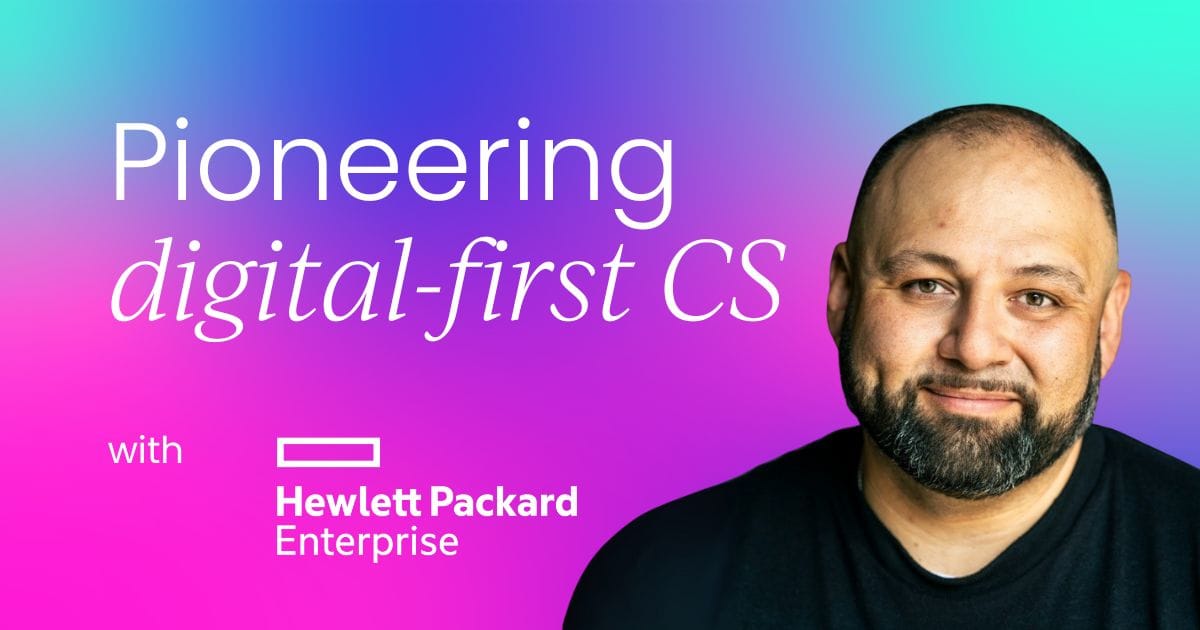
What Akeneo is mastering with technology
Today, the pressure to do more with less has never been more pronounced. At Akeneo, we're embracing technology to meet this challenge head-on, particularly through the use of playbooks and automation tools. We've been using a CS software tool to create these playbooks, marking a significant step in enhancing our efficiency.
The process starts by taking a comprehensive look at the customer journey, and identifying critical moments that can make or break the customer experience. Each of these moments is linked to a specific action, whether it's a task for a CSM, a reminder to reach out to a customer, or an automated email providing valuable information or resources.
Collaboration with marketing
Our marketing department has been instrumental in this process, developing campaigns that we integrate directly into the CS tool.
We've since evolved this partnership further, now leveraging dedicated marketing tools that give us richer engagement data and greater flexibility to make communications more aesthetically pleasing and professional. This ensures that even if a customer doesn't receive frequent direct meetings or calls, they're still in regular contact with us, receiving useful resources and communications.
This strategic use of technology allows us to proactively meet our customers' needs, often before they even have to ask. It's about understanding where customers typically encounter challenges and providing them with the right tools and resources at the right time.
By automating certain aspects of the customer journey, we not only increase our efficiency but also maintain a high level of engagement with our customers, ensuring they have everything they need to succeed. This approach is crucial for scaling our operations while maintaining the quality and personalization of our customer success efforts.
 Matthew Paupst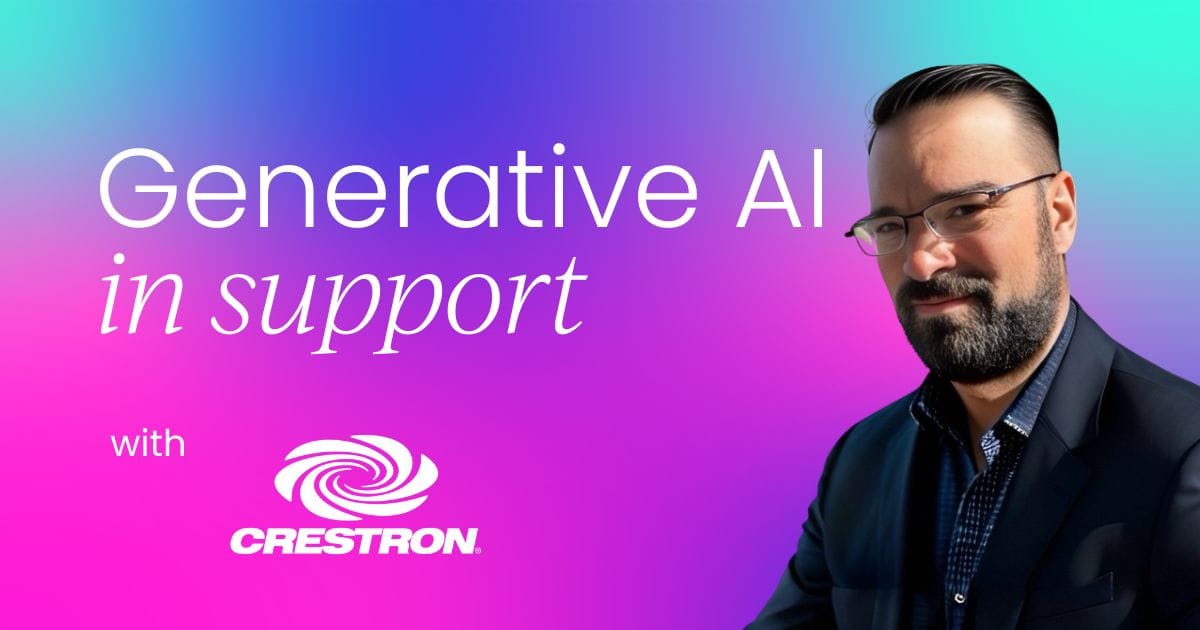
The role of AI in customer success
Generative AI, especially platforms like Gemini, has become an indispensable tool in the arsenal of customer success at Akeneo. Its impact has been revolutionary, aiding in the creation of content that is engaging, precise, and timely.
While the essence of our communication strives to remain personalized and far from robotic, generative AI has been a game-changer in overcoming common obstacles such as writer’s block, which many of us encounter while drafting email templates or preparing content for customer communications.
Generative AI for content creation
One innovative application of generative AI has been in scripting short, informative videos intended for customer engagement.
Recognizing the importance of keeping content concise – ideally no longer than two to three minutes – Gemini has provided us with a valuable starting point, saving us considerable time in content creation. This approach aligns with our strategy to diversify our tech touch initiatives, making the customer experience more engaging and dynamic.
Using customer success software with built-in AI
Beyond content creation, we use automation and AI through our CS tool for operational efficiencies, such as monitoring customer usage thresholds. These automated alerts enable proactive engagement, ensuring customers are aware of upcoming limits or opportunities, seamlessly blending the capabilities of AI with our commitment to exceptional customer service.
AI use across the business
We've also extended our use of AI into other tools across the business – most notably Gong, which gives us insights from calls happening throughout the organization.
This allows us to stay informed of conversations we might not be in the room for, and helps shape the strategic discussions we have with our customers. The result is a true 360-degree view of every touchpoint, keeping internal teams aligned and working in tandem – something that can be a genuine challenge when operating across multiple departments.
For our customers, this cross-functional cohesion adds a layer of trust in their relationship with Akeneo as a whole.
We've also developed a library of shared prompts across the CS organization – not just to drive efficiency, but to help our CSMs grow in their roles. These prompts increase visibility, surface potential risks, and encourage a more proactive mindset.
 Jatin Sharma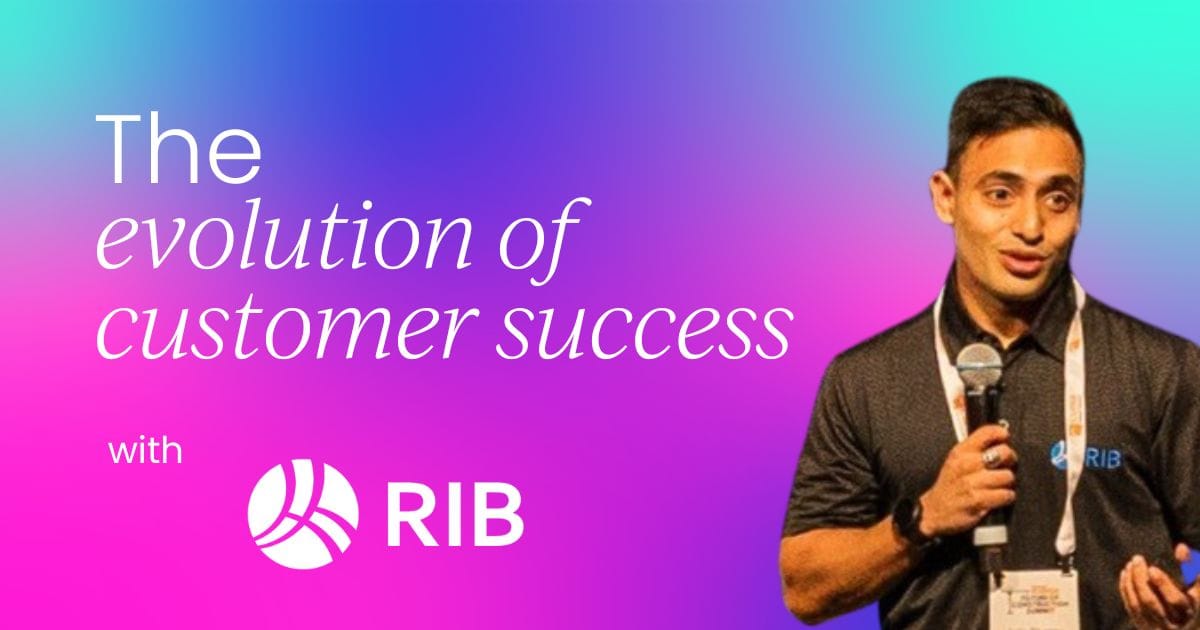
A practical example is meeting preparation: a specific prompt can quickly summarize the last several conversations with a customer and surface any open follow-ups, ensuring nothing slips through the cracks.
Collectively, using AI across all our tools and resources is like having peripheral vision across everything happening with a customer – allowing us to stay ahead of the curve and catch early warning signs before things have a chance to fall out of place.
The future of AI in customer success
The potential applications of AI in customer success extend far beyond what we’ve explored to date. Conversations with other CS leaders, including insights gathered at conferences, highlight the vast array of innovative ways AI can be integrated into customer success strategies.
As we continue to explore these possibilities, our aim is to delve deeper into AI’s capabilities, enhancing our efficiency, and refining our approach to customer engagement.
 Danielle Martin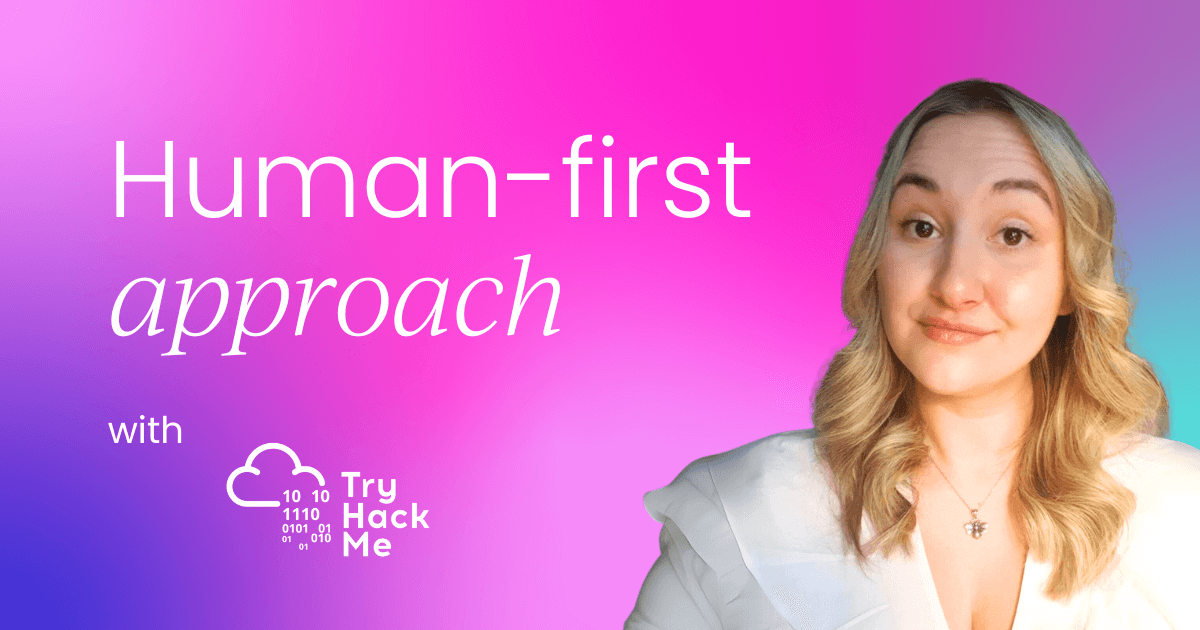
Balancing tech touch with human connection in customer success
In the journey towards integrating advanced technologies like AI and automation into customer success strategies, striking a balance between efficiency and maintaining a human-centric approach is paramount.
The objective is for these technological enhancements to be imperceptible to the customer, offering a seamless experience that aligns with their expectations without making them feel sidelined.
The key to achieving this balance is understanding the unique needs and engagement patterns of each customer. For instance, a customer who actively participates in bi-weekly meetings, bringing forward numerous questions and requiring detailed discussions, would not be suited for a transition to a low-touch model without careful consideration.
Such decisions are made with the customer's journey in mind, ensuring that any shift towards more automated engagement models occurs at a point where it complements their needs and the natural progression of their projects.
Our approach at Akeneo involves meticulous planning and sensitivity toward the customer's timeline and experience. This process isn't abrupt but rather a deliberate strategy that considers the optimal timing for transitioning customers between engagement models. Our commitment to being customer-minded is evident in how we tailor these transitions, ensuring they align with both the customer's requirements and our operational goals.
Adding personal touches, such as incorporating personalized videos in communications or including a picture in email signatures, plays a crucial role in maintaining a sense of personal connection. These elements help to humanize the tech-touch approach, bridging the gap between digital efficiency and the warmth of human interaction.
In managing customer expectations during the transition to more tech-driven interactions, transparency, and preparation are key. Identifying potential challenges and planning for them ensures that we can mitigate any issues before they arise.
 Swati Chopra
Monetizing customer success
Through extensive research and segmentation efforts, we identified a specific subset of our customer base that requires more than what our standard CSM offerings provide.
These customers, situated beyond the high-touch segment, necessitate what we've termed “hypercare” – a level of service that caters to their intricate needs and demands.
To address this, we’re introducing the Premium plan, an exclusive service tier that, while paid, delivers significant value through additional technical resources, educational benefits, including access to classroom training, and more.
This plan is designed for customers facing unique challenges or undergoing critical transitions, such as expanding into new markets. The additional cost is justified by the tailored support and resources it provides, enabling these customers to effectively navigate complex projects and achieve their strategic objectives.
The reception to similar initiatives in my past experiences has been overwhelmingly positive. Initially anticipated as a temporary solution for customers during pivotal moments, the enhanced level of service quickly became indispensable to them.
This not only solidified the value of the offering but also presented an opportunity for account expansion and increased ARR. Moreover, it contributed positively to the customer success function's visibility and perceived value within the organization.
The Premium plan stands as a testament to the potential of monetizing customer success – not just as a revenue-generating strategy but as a means to elevate the level of support and partnership we offer our customers. It underscores the importance of recognizing and acting on the unique needs of different customer segments, providing them with tailored solutions that contribute to their success and, by extension, ours.
 Jovana Djapa
Identifying and collaborating on monetizable customer success opportunities
Identifying customers who might benefit from enhanced, monetized customer success services often starts with recognizing their heightened need for support.
This recognition can come from direct requests for more intensive assistance, frequent professional services engagements, or noticeable strains on a CSM time due to a customer's demands.
Such indicators not only highlight the customer's need for additional support but also signal potential opportunities for introducing premium service offerings like our Premium plan.
The genesis of the Premium plan at Akeneo was directly influenced by our customers' expressed desires for higher levels of service, beyond what standard packages offer. These requests often come in nuanced forms – sometimes as a half-joking desire for duplicating a particularly effective CSM, but more fundamentally, as a clear indication of the need for what we've come to define as hypercare.
This realization prompted us to consider why we weren't already providing such an option and led to the development of a service that addresses these unique demands while also contributing to our revenue.
The relationship between customer success and sales teams is crucial in navigating and capitalizing on these opportunities. At Akeneo, customer success manages expansion directly, with collaboration from sales on larger accounts. Our sales and CS teams work in tandem, much like "peanut butter and jelly," to ensure a harmonious and effective partnership.
This collaboration is facilitated by regular meetings, such as quarterly business reviews, where we discuss customer accounts, potential expansions, and strategize on mutual goals.
Creating a culture of collaboration between sales and customer success is vital for leveraging monetizable opportunities effectively. Understanding each other’s metrics, goals, and methods is fundamental to this process.
For organizations where this relationship might not yet be as strong, investing time in building mutual respect and understanding can significantly enhance the ability to work together towards common objectives. This not only improves the potential for revenue generation through customer success but also enriches the overall customer experience by providing services that meet their evolving needs.
 Grace Gupta
The challenges of customer segmentation
In our journey of segmenting customers at Akeneo, we encountered several challenges, each offering valuable lessons on how to navigate this complex process more effectively.
One significant misstep was in the terminology we used within our internal systems to categorize different segments as high, medium, and low. This inadvertently impacted our CSMs, particularly those managing what was labeled as the "low" segment.
The naming convention, while seemingly innocuous and intended only for internal classification, carried unintended connotations that affected the morale of our CSMs. It highlighted the sensitivity required in internal communications and the importance of considering the implications of the language used.
If I could go back, I would opt for terms that carry a more neutral connotation, such as "digital touch," to describe the various levels of customer engagement, avoiding the unintended hierarchical implications.
Another challenge was the timing and development of our playbooks. In our eagerness to streamline operations, we created digital playbooks before fully understanding the nuances of the customer journey, especially in the digital segment. This premature commitment led to the need for significant revisions and rework.
The lesson here is the value of patience and thorough testing. Running through the customer journey and associated playbooks manually for a period before digitizing them can save time and resources in the long run. It allows for a more adaptable approach, where adjustments can be made based on real-world feedback without the need to overhaul digital systems.
The key takeaway from these experiences is the importance of a thoughtful, deliberate approach to customer segmentation and the implementation of supporting systems. Balancing the needs of both customers and CSMs, while also allowing for flexibility and adaptation, is crucial.
Experimentation and adjustment are inevitable and necessary parts of the process, but with careful planning and open communication, the challenges can be managed effectively. These insights can hopefully guide others in their customer segmentation efforts, helping to avoid similar pitfalls and ensuring a smoother, more responsive approach to meeting the diverse needs of their customer base.
Like this article? We've got a whole lot more in store for you.
If Kimberly's article has stirred a hunger for more CS knowledge, we have just the thing.
You can enroll in our Customer Success Leadership Accelerator program and become one of tomorrow's champions of customer success.
What to expect in this game-changer of a course:
🧠 Non-stop, actionable insights
🔧 Practical applications every week
🤫 Total privacy with your closed CS leadership group
👥 Tons of networking opportunities
📚 Hands-on coursework activities
💡 Endless ideas from your peers and presenters
🔥 Fuel to shape your gold-standard CS strategy
This article was based on Kimberly’s appearance on the CS School podcast. Catch up on all episodes.


Become a CSC Insider
Thank you for subscribing
Get exclusive insights, frameworks, and strategies from customer success leaders driving real business impact.
An email has been successfully sent to confirm your subscription.
 Follow us on LinkedIn