








Nearly two years ago, I moved from London to Dubai to continue my career as a Customer Success Manager (CSM). Having worked with companies and clients across the UK, US, and Europe, I thought I had a solid grasp of the profession. But I quickly discovered that the customer success (CS) landscape in the Middle East is an entirely different world.
My journey has been a fascinating lesson in adaptability, cultural nuance, and the universal importance of human connection.
If you’re a CS leader or a CSM working with clients in this region, you have to be ready to throw out your existing playbooks and learn to navigate a market that is as diverse as it is dynamic.
The Middle East is not a monolith
It’s a common mistake to think of a region like the Middle East or Europe as a single entity. Just as you wouldn’t use the same approach in France as you would in Eastern Europe, you can't apply a one-size-fits-all strategy across the Gulf Cooperation Council (GCC) countries.
The UAE, Saudi Arabia, Oman, Qatar, Kuwait and Bahrain each have distinct cultures and business practices. Understanding these differences is the first step to building effective customer relationships.
Adapting your communication style
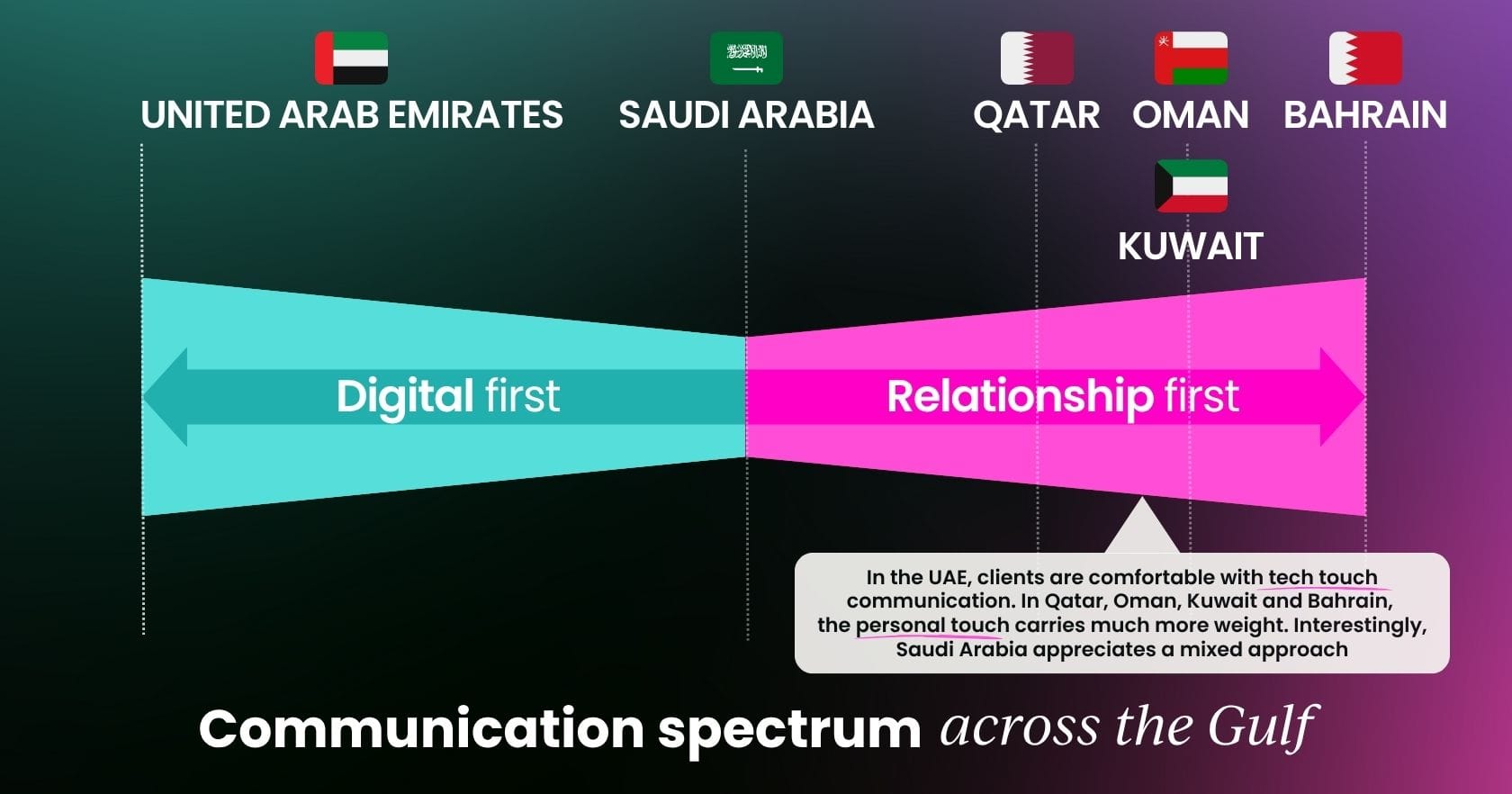
Communication preferences vary dramatically from one country to the next. In the UAE, which is a major tech hub like Dubai, clients are often comfortable with a tech-touch approach. They prefer resolving matters over email or a quick phone call.
However, if you move your focus to a country like Qatar or Bahrain, the dynamic shifts completely. There, a face-to-face meeting or even just a phone call holds far more weight than an email. I’ve learned that if I don’t pick up the phone to connect with my clients in Bahrain, I’ll never get through to them. That personal touch is non-negotiable.
The power of in-person connection
This emphasis on personal interaction has a direct impact on how you manage your time and budget. In other regions, companies might invest heavily in software to track data and trends. Here, a significant portion of the budget needs to be allocated for travel and events.
For high-stakes conversations like a renewal or a major expansion opportunity, I need to be ready to get on a plane and go see my clients in person. A renewal in some countries simply won’t happen without that face-to-face commitment. It’s a powerful reminder that while technology is a great enabler, it can't replace the trust built through direct human connection.
 Dominic Constandi
Redefining the role of a Customer Success Manager
Because CS is still a relatively new concept in the Middle East compared to other regions, the role of a CSM often looks very different. The function is still evolving, and as a result, CSMs here tend to wear many more hats.
Wearing multiple hats: From support to marketing
In a single day, I might move between traditional CS tasks, technical support, onboarding, and even implementation, which are often separate functions in more mature markets. You might also find yourself involved in marketing efforts, helping to plan and execute events to build brand presence.
You have to be the person the client needs you to be in that moment. That might mean acting as a support agent to fix an immediate issue before you can pivot the conversation toward long-term engagement and return on investment. It requires a great deal of mental agility and a willingness to step outside the typical CS job description.
A greater focus on growth and retention
Another key difference is the primary focus of the CS function.
In the West, there’s a strong emphasis on driving customer outcomes. Here, especially in the startup scene, the focus is heavily weighted toward growth and retention. This is partly because the market is newer and companies are focused on hitting revenue targets for funding and expansion.
This often means the CS role leans more toward a sales-based, account management approach, where you are responsible for renewals and upsells. The core question is often, "How can we retain our customers and continue growing?" rather than, "How do we ensure customers achieve their desired outcomes?"
The challenge of educating your customers
Because CS is often conflated with support or sales, a big part of the job is educating clients on what customer success actually is. You have to be very clear about your function from the first introduction.
I make it a point to give clients specific examples: "If you have this type of incident, you can come to me. If you have that type of issue, you should contact this team." It’s about guiding them through that relationship and slowly demonstrating the strategic value you bring beyond just fixing problems or merely processing renewals.
The art of relationship-building in the Middle East
If there’s one thing that defines customer success in this region, it’s the importance of personal relationships. But building those relationships requires an approach that is often more informal and personal than what many of us are used to.
Why informal connections matter
Here, major commercial discussions don't always happen in a boardroom. More often, they happen over dinner, coffee, or during a casual catch-up. Your clients want to know who you are as a person, not just as a professional. They need to see you as trustworthy and well-connected.
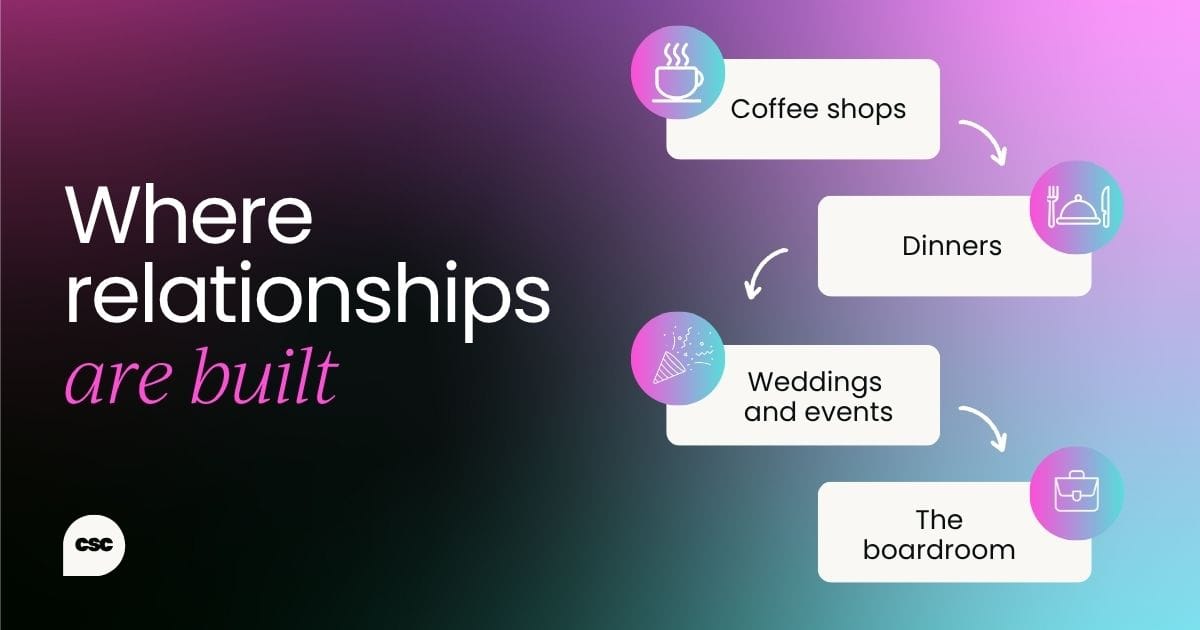
This was beautifully illustrated for me when I was invited to one of my clients’ weddings. In Dubai, many people are expatriates who have moved here without their extended families, so the connections you make – both professional and personal – tend to be much stronger. Your clients can become your friends, and that informal bond goes a long way in building lasting business partnerships.
Navigating different work schedules
A practical but crucial aspect of communication is understanding the different work weeks. In the UAE, we work Monday to Friday. But in other countries like Saudi Arabia and Qatar, the work week is typically Sunday to Thursday.
This simple difference has a huge impact on planning and communication. If you email a client in Saudi Arabia on a Friday afternoon expecting a reply on Monday, you’re already behind; their week starts on Sunday. You have to be mindful of these schedules, including shorter workdays on Fridays in some places, to ensure your communication is timely and effective.
Startup agility vs. enterprise structure
The approach to customer success also varies significantly depending on whether you're in a startup or a large, global enterprise.
The startup advantage: flexibility and tailored solutions
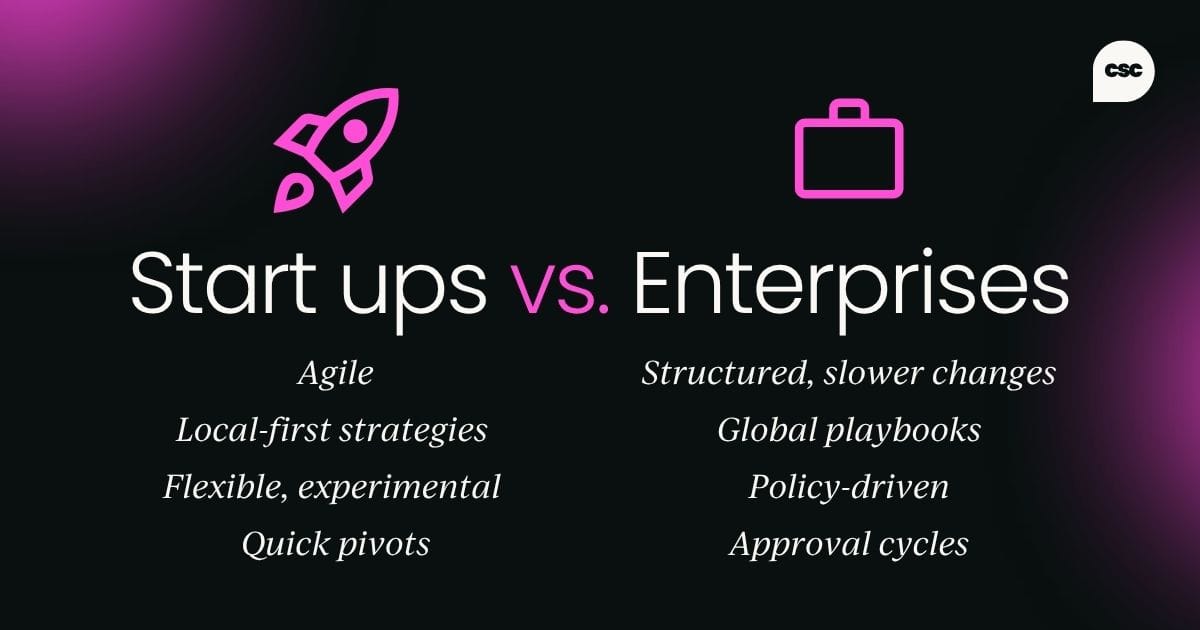
Startups in the Middle East have a distinct advantage: flexibility. They understand the competitive landscape and are often willing to invest in what makes them unique, whether it’s training CSMs on unique value propositions or tailoring their product to local needs.
They can be more agile and project-based in their CS approach, focusing on what a specific client wants to achieve. With a flatter hierarchy, decisions can be made quickly, allowing them to adapt their strategy on the fly to meet market demands.
The enterprise challenge: Navigating global playbooks
Working for a large, global organization in a newer market like the Middle East means you often operate like a startup within a massive corporation. You have the budget and resources, but you may lack the structure and flexibility needed for the local market.
Processes and playbooks designed in the US or UK don't always work here.
If you need to tailor your approach – for example, agreeing to visit a client four times a year instead of the standard two – you often have to jump through corporate hoops to get approval from a head office in another region. While leaders are often receptive to feedback, the time it takes to implement changes can be a significant challenge.
My advice for CSMs new to the region
Looking back on my own journey, my best advice for any customer success manager considering a move to the Middle East is simple.
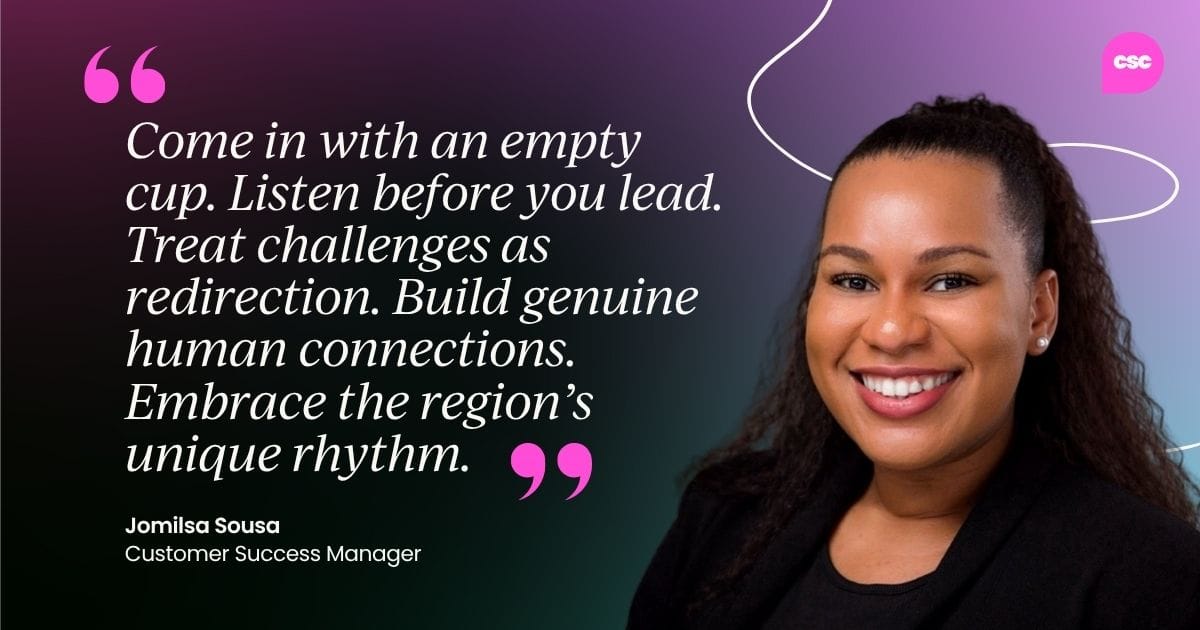
Come in with an empty cup
I arrived without ever having visited before, and I can tell you that the most important thing is to approach it as if you know nothing. Everything you learned about CS in another market is a great foundation, but it won't always translate. Be a sponge.
Listen to people who have worked here. Understand their challenges, their pain points, and what has made them successful. Their experience is the most valuable resource you have.
View challenges as redirection
You will face challenges. A strategy that was successful with one client will fall flat with another. Instead of viewing these moments as failures, see them as redirection. Each one is a learning opportunity that teaches you more about the customs, culture, and unique ways of working in this incredible market.
The future of customer success in the Middle East
Despite the manual processes and human-led approach, the region is on the cusp of a technological shift. The trend I’m most excited about is the growing adoption of customer success software and AI.
Currently, much of our work is manual, from gathering data to mapping the customer journey. The introduction of dedicated CS platforms will be a game-changer. It will allow us to automate time-consuming tasks and access the data we need to make better decisions.
This won't replace the human connection that is so vital here. Instead, it will free us up to focus more on what truly matters: building those strong relationships and delivering real, measurable return on investment for our clients.
Navigating customer success in the Middle East is a constant exercise in adaptation. It requires you to be a strategist, a relationship-builder, and a cultural translator all at once. But for those willing to listen, learn, and embrace its unique rhythm, it’s an incredibly rewarding experience.
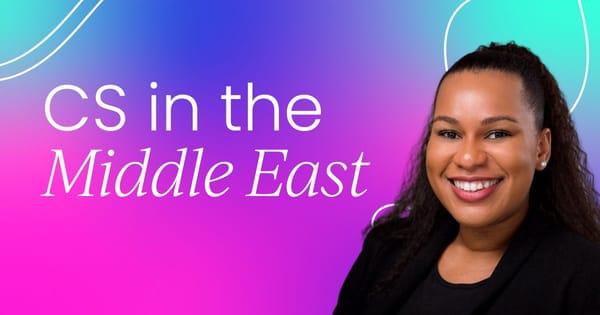
This article is based on Jomilsa’s appearance on the CS School podcast.


Become a CSC Insider
Thank you for subscribing
Get exclusive insights, frameworks, and strategies from customer success leaders driving real business impact.
An email has been successfully sent to confirm your subscription.
 Follow us on LinkedIn