











Only 37.2% of companies monetized customer success (CS) last year, according to the State of Customer Success 2025 Report. The other 62.8% still include it for free. That single stat has become a quiet fault line in the CS world.
Because customer success today looks nothing like it did three, or even five, years ago.
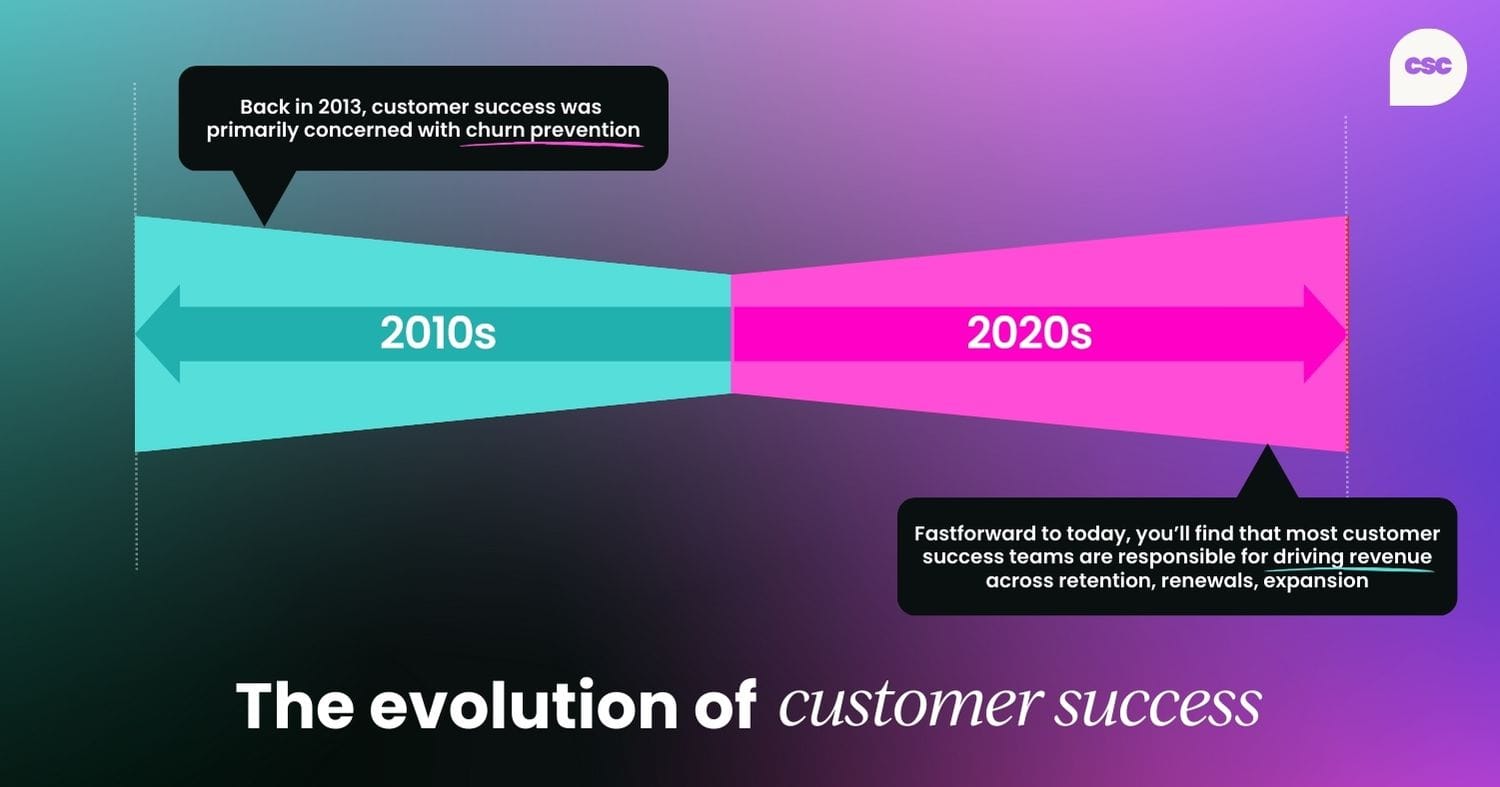
CS teams are more commercial than ever. They own renewals. They influence expansion. They’re tied directly to revenue outcomes that influence P&L.
And yet, most companies still won’t put a price tag on CS. So what’s really going on here? Why the trepidation? Especially when the pressure on CS teams to drive revenue keeps climbing. Is this reluctance holding teams back, or protecting something more valuable?
To answer that, we need to look beyond pricing models and into how CS is positioned, perceived and protected.
Let’s break it down.
Customer success wasn’t built to be transactional
Customer success didn’t start life as a revenue function. It emerged as a response to churn, especially in SaaS and subscription businesses where losing customers early could kill growth. The logic was straightforward: if customers realize the value of the product they've bought and become successful with it, they stay; if they don't, they cancel and the business loses revenue.
That logic shaped everything about how CS was positioned. It was proactive, embedded, and relationship-led. It wasn’t something you sold; rather, it was something you promised.
Jess Osborn, Customer Success Lead at DeepL, puts it clearly when she says customer success has long been seen as "important, yes – but treated as a cost center rather than a growth engine." That framing stuck. Even as CS teams took on renewals, upsells, and commercial accountability, the idea that CS should be “included” never really went away.
Charging for customer success can feel like breaking that original promise. And once trust shifts, especially in long-term customer relationships, it’s hard to reset expectations.
When the free model starts working against you
Here’s where the tension shows up. Customer success is expected to be strategic. You’re meant to guide customers, shape outcomes, and influence long-term value. But because CS is free, it’s often treated as optional.
Julien Le Terrien, Chief Customer Officer at Mobilexpense, put this bluntly: customers link value to price. When services are provided free of charge, they’re far more likely to be overlooked or deprioritized.
You see it everywhere. You see it in skipped onboarding sessions. In QBRs that get pushed back again and again. In strategic recommendations that don’t get acted on until something breaks. The work is valuable, but the signal doesn’t always land.
What makes this more frustrating is that the willingness to pay is already there. The State of Customer Success 2025 Report shows that 64% of companies are willing to pay for premium support. So this isn’t a demand problem, rather it’s a confidence problem.
Leaders worry about what happens when money enters a relationship that’s been built on trust and advocacy.
 Grace Gupta
Fear of friction is very real (and justified)
Customer success teams are positioned as trusted advisors. You’re meant to advocate for the customer, not sell to them. That identity is deeply ingrained – and for good reason.
Mark Higginson, Chief Customer Officer at Screensteps, sums up the concern well: monetizing customer success can work, but forcing it can backfire if it erodes trust or misaligns incentives.
That fear isn’t theoretical. Charging for CS can complicate onboarding conversations, add friction to renewals, or push CSMs into sales motions they’re neither trained for nor comfortable with. In some cases, it can blur the line between what’s genuinely in the customer’s best interest and what’s contractually paid for.
For many organizations, keeping CS non-monetized feels safer, even if it caps growth. And in certain markets, it genuinely is.
For some teams, keeping customer success free is the strategy
In crowded markets, customer success is often the differentiator. It’s how you reduce churn, drive adoption, build loyalty, and win renewals without heavy discounts. When CS is part of how you compete, charging for it can feel a little risky.
If your competitors offer similar support for free, monetization can quickly become a disadvantage – a black mark against you. That’s especially true when your product is complex, your customers are still learning what "value" looks like, or your CS impact is real but hard to quantify.
In those situations, many leaders make a deliberate call: keep CS free, win on experience, outperform on outcomes. And honestly, that’s not a bad strategy.
This is why the 62.8% figure matters so much. It doesn’t signal hesitation. It signals intent.
But not monetizing customer success has real consequences
What’s changed over the past few years is the cost of that caution.
Jess Osborn points to a tougher reality between 2022 and 2024. Net revenue retention declined. CS headcount growth slowed. Teams came under sharper scrutiny as budgets tightened. And when customer success is always framed as a cost center, it becomes an easy target during cuts.
Not monetizing CS doesn’t just mean leaving revenue on the table. It can mean defunding the very function responsible for retention and expansion; it can stall innovation; over time, it can turn customer success into a career risk rather than a growth engine.
Monetization, in that sense, isn’t only about revenue. It’s about relevance, resilience, and long-term credibility inside the business.
 Jess Osborn
Engagement changes when customers pay
One of the strongest arguments for monetizing customer success is engagement.
Jess Osborn shares a moment from her time at Bazaarvoice that many CS leaders will recognize instantly. Once customers started paying for services, executives who had previously been disengaged suddenly showed up. They attended kickoffs. They participated. They leaned in.
Why? Because they were invested.
When customers pay, they commit. They prioritize outcomes. They treat customer success as strategic rather than optional. That shift alone can dramatically change the effectiveness of CS, not because the work is different, but because the context is.
That’s not transactional. That’s alignment.
Monetization doesn’t mean charging everyone
This is where many companies get stuck. They assume monetizing customer success means putting a price tag on everything and charging every customer the same way.
That’s rarely what works.
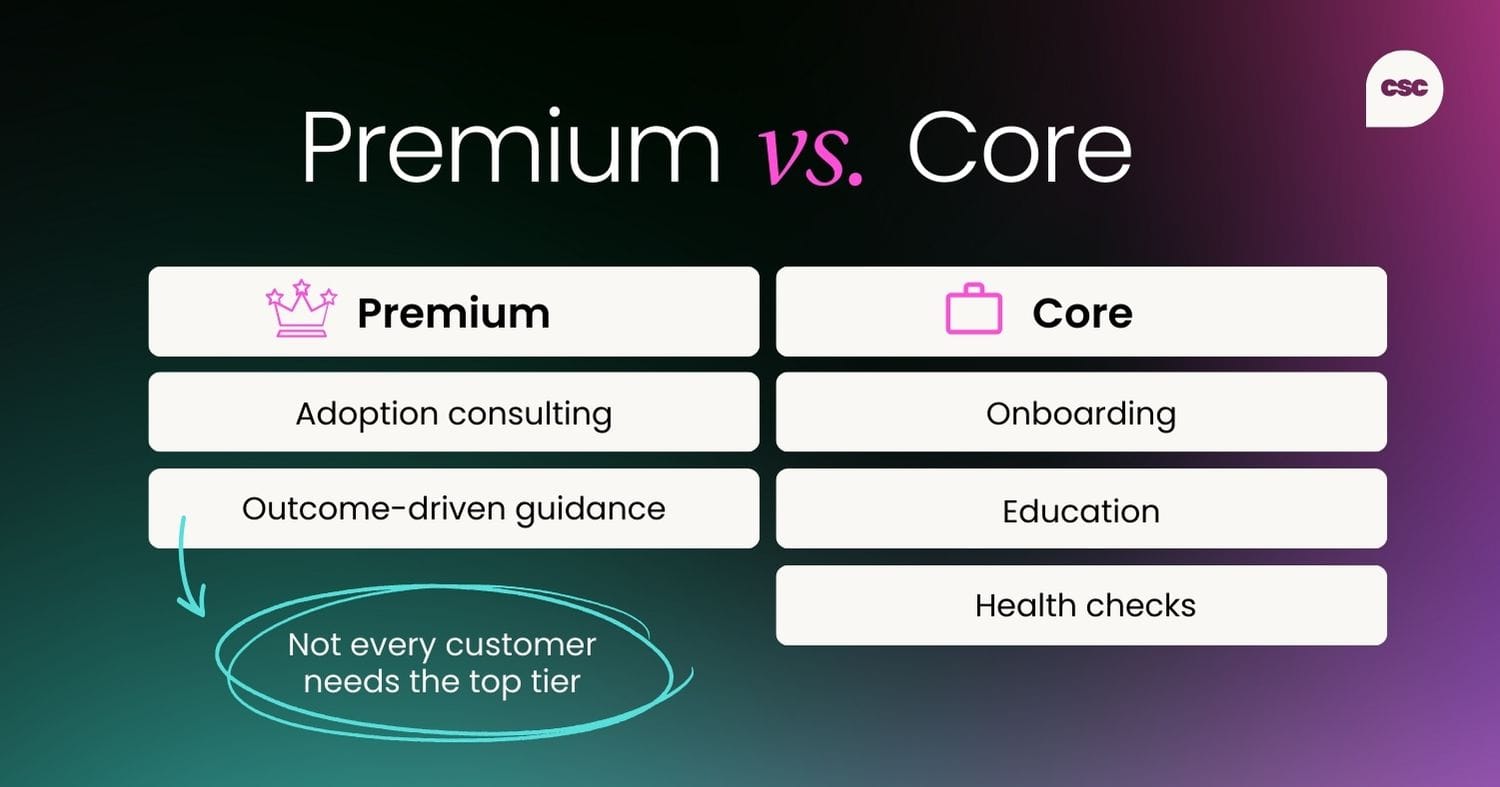
On the CS Convos podcast, Swati Chopra, Technology Director at Everywhen, described the real shift as moving from viewing customer success as a cost function to viewing it as a revenue function. But that doesn’t mean losing flexibility or empathy. The most effective models segment customers by need and complexity, then offer tiered experiences that match the value delivered.
Instead of selling “a CSM,” teams build experience packages. These might include paid implementation, education and enablement, health checks, adoption consulting, or strategic guidance tied to outcomes. Not every customer needs white-glove service. But the ones who do are often willing, and even happy, to pay for it.
The key is charging where value is clear and incremental, not universal.
 Hamish Wood
The GoCardless proof point (and why it’s the exception)
If you want concrete proof that monetized customer success can work at scale, GoCardless is hard to ignore.
Under Hamish Wood’s leadership, as VP, EMEA Customer Success & Account Management, GoCardless unified customer success, support, and implementation into a single ecosystem, then packaged those services into clearly defined tiers. Sales was fully enabled and incentivized, not sidelined. And the results followed quickly.
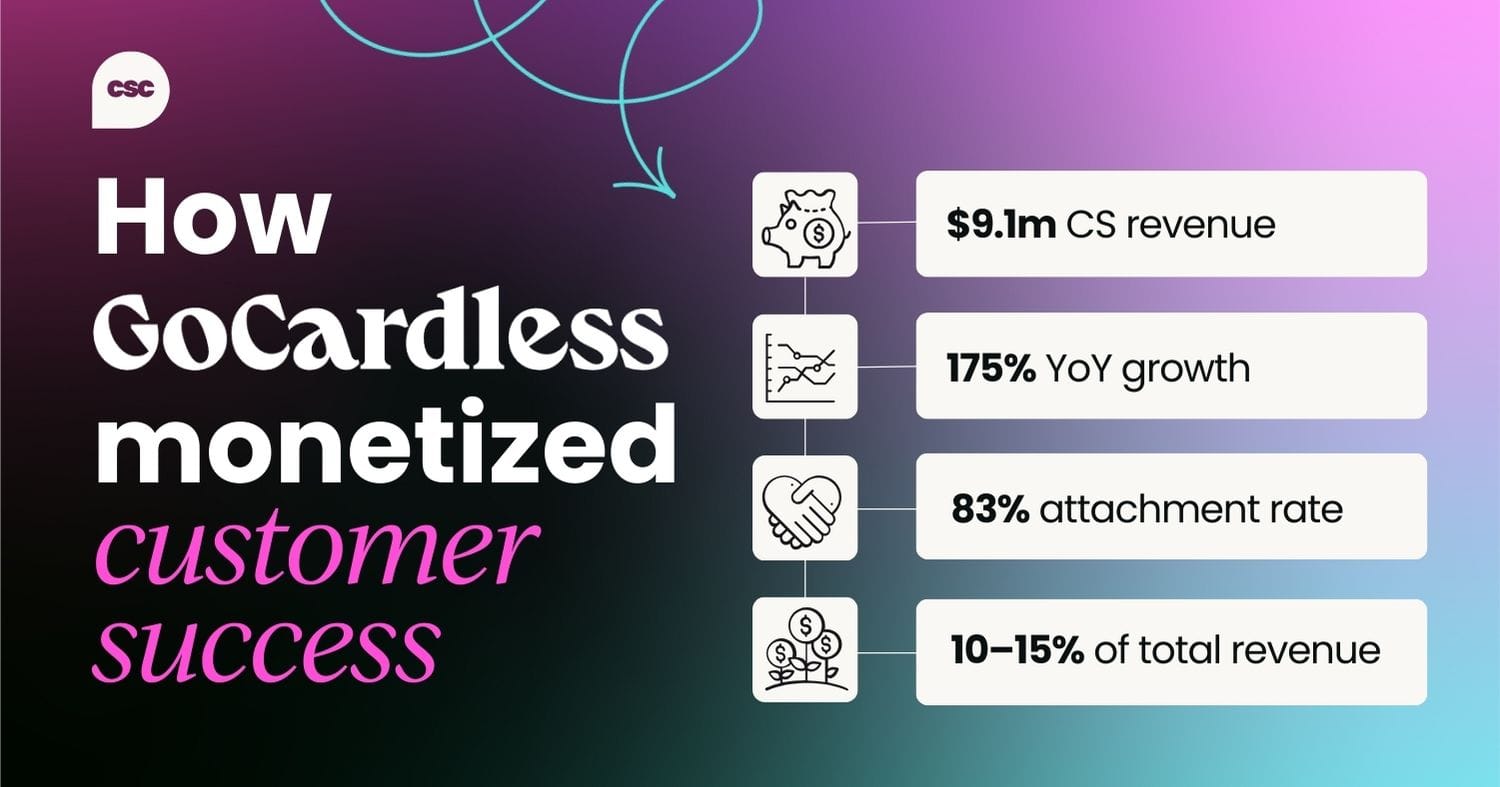
GoCardless went from zero to $2.7 million in CS package sales in just three months. By April 2024, customer success packages generated $9.2 million in revenue, with 175% year-over-year growth. Attachment rates hit 83%. Gross retention on packages reached 89%. At its peak, monetized CS became GoCardless’s second-largest revenue stream, contributing between 10 and 15% of total revenue.
That’s not some mad, half-baked experiment. That’s a serious business model.
Sometimes it’s about language, not value
One of the most interesting lessons from GoCardless wasn’t structural. It was linguistic.
They stopped calling their offering a "CS package" and started calling it a platform fee. That small shift made the value easier to understand and easier to sell. Customers were already familiar with platform fees. Sales teams were more confident in positioning it. And customer success stopped feeling like an optional add-on.
Sometimes monetization fails not because the value isn’t there, but because the framing is wrong.
Why 37.2% might actually be the right number
Here’s the nuance the data reveals.
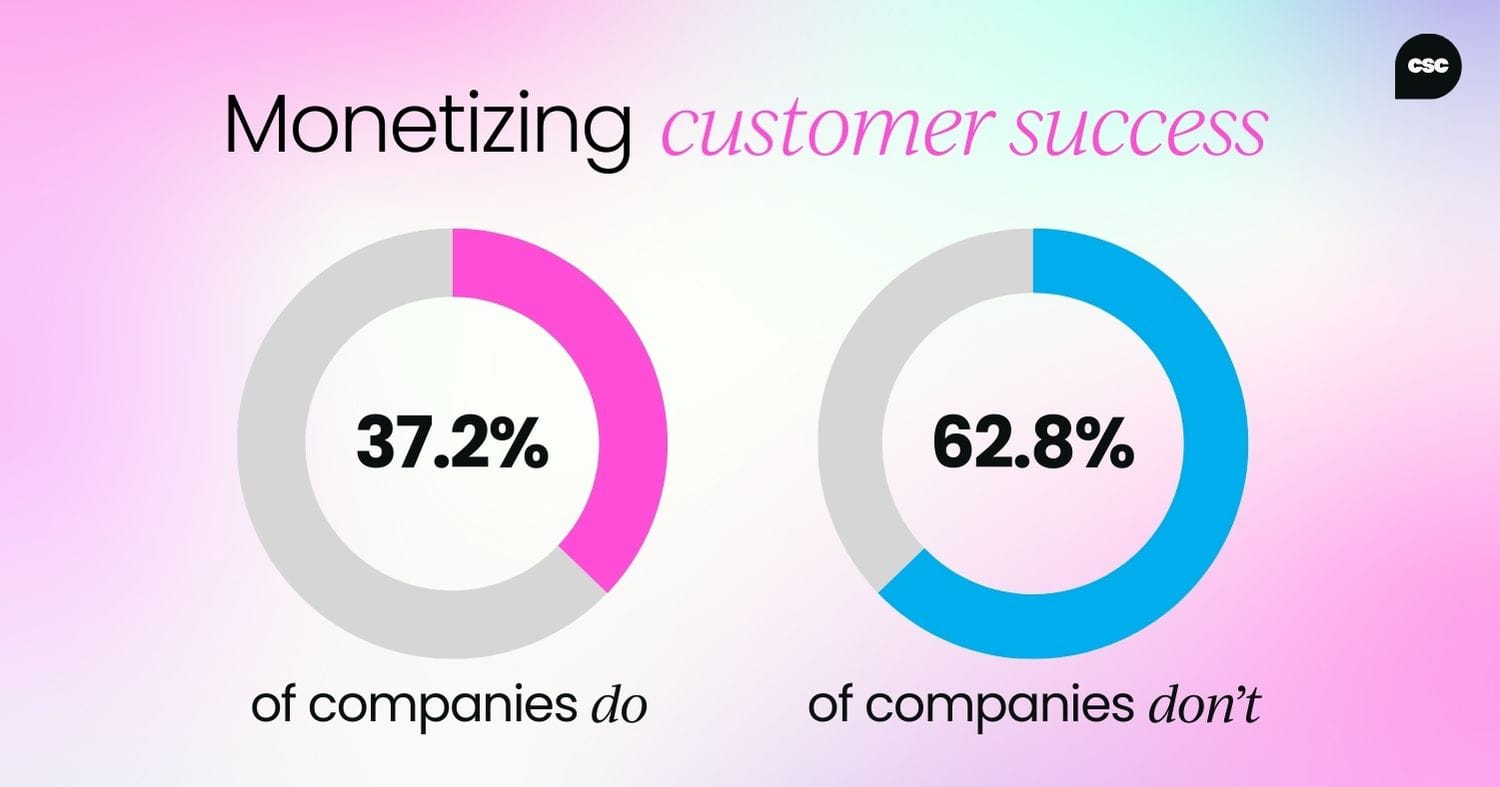
Mark Higginson says he’s surprised monetization is as high as 37.2%. Because monetizing customer success simply isn’t right for every business.
In some models, CS works best when it’s deeply embedded in the product experience, when success is measured through retention and growth rather than billables, and when incentives remain fully aligned with customer outcomes. In those cases, monetization can weaken CS rather than strengthen it.
So, reluctance doesn’t necessarily signal resistance or lack of ambition. Often, it’s restraint.
What the data is really telling you
The State of Customer Success 2025 Report doesn’t show an industry stuck in the past. It shows one being deliberate.
Most leaders understand that customer success is more strategic than ever, that premium services can be monetized, and that getting it wrong can damage trust. So the prevailing mindset makes sense.
Prove the value first. Then decide if pricing strengthens or weakens the relationship.
What this means for you
If you’re debating whether to monetize customer success, you’re not behind. You’re exactly where the industry is.
The real question isn’t whether you should charge for CS. It’s where monetization amplifies value, and where it puts it at risk. Answer that honestly, and the right model usually becomes clear.
The takeaway
That 62.8% non-monetization rate isn’t a failure to evolve. It’s a clear signal.
Customer success sits at the center of trust, outcomes, and long-term growth. Not all value needs a price tag to be real. But when monetization is grounded in value, aligned across teams, and designed around outcomes, customers don’t resist it.
They invest in it.
If you liked this article and want to learn more about behaviors and trends in customer success, download our State of Customer Success 2025 Report for all the latest developments in the CS field.


Become a CSC Insider
Thank you for subscribing
Get exclusive insights, frameworks, and strategies from customer success leaders driving real business impact.
An email has been successfully sent to confirm your subscription.
 Follow us on LinkedIn