









After many years in customer experience and success – working with startups, Fortune 500s, and everything in between – I can tell you that making a customer “successful” is about far more than answering their emails quickly or resolving the occasional support ticket.
True customer success is about helping customers consistently reach their goals, and in a way that strengthens the relationship over time. It’s about building trust, delivering measurable value and staying aligned even when markets shift or priorities change.
It’s also deeply human work. I’ve seen customers light up when a goal they thought was out of reach suddenly becomes reality, and I’ve seen the other side, when a lack of clarity or communication slowly erodes what could have been a great partnership.
The good news? The same principles that create success in one account can be scaled and applied across many if you approach them with both strategy and empathy.
Start with relationships and trust
It all starts with relationships and trust. You can have the most advanced product, the sleekest onboarding, and the best marketing in the world. But if the relationship between your team and your customer feels transactional, you’ll always be one step away from losing them.
One of the most powerful tools I’ve seen is executive sponsorship. When senior leaders are invested in a customer’s success, it sends a message that they matter – not just to the account manager they talk to every week, but to the entire organization.
I remember pairing one of our VPs with a strategic customer who’d been growing increasingly skeptical. Over the next six months, that VP became a regular presence on their calls, and their tone shifted from guarded to collaborative. By the end of the year, they were our biggest advocate in their region.
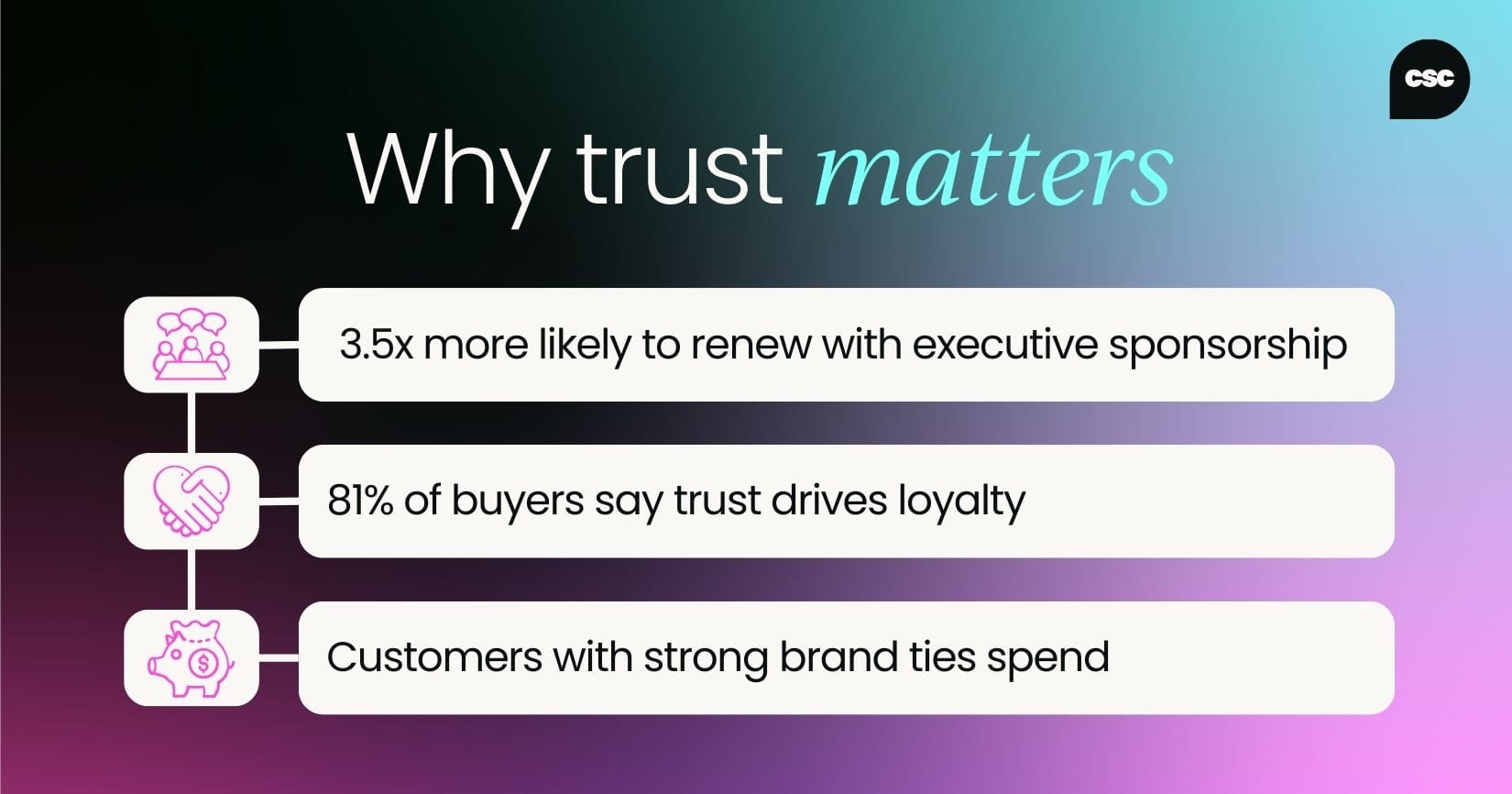
Some key data points to consider:
- Executive sponsorship impact: According to the Customer Success Association, accounts with active executive sponsorship are three and a half times more likely to renew and expand compared to those without senior-level engagement.
- Trust and loyalty: A 2023 Edelman Trust Barometer report found that 81% of customers say trust is a deciding factor in their purchase decisions and ongoing loyalty.
- Customer retention: Gallup research shows that customers who have a strong relationship with a brand are likely to spend 23% more than average customers.
- Advocacy: According to Temkin Group, companies that excel at customer experience have two and a half times more engaged employees, which in turn leads to higher rates of customer advocacy – customers are five times more likely to recommend the brand.
Keep aligning with evolving goals
Understanding a customer’s goals – and keeping up with how those goals evolve – is just as important. I’ve learned the hard way that assumptions are dangerous here.
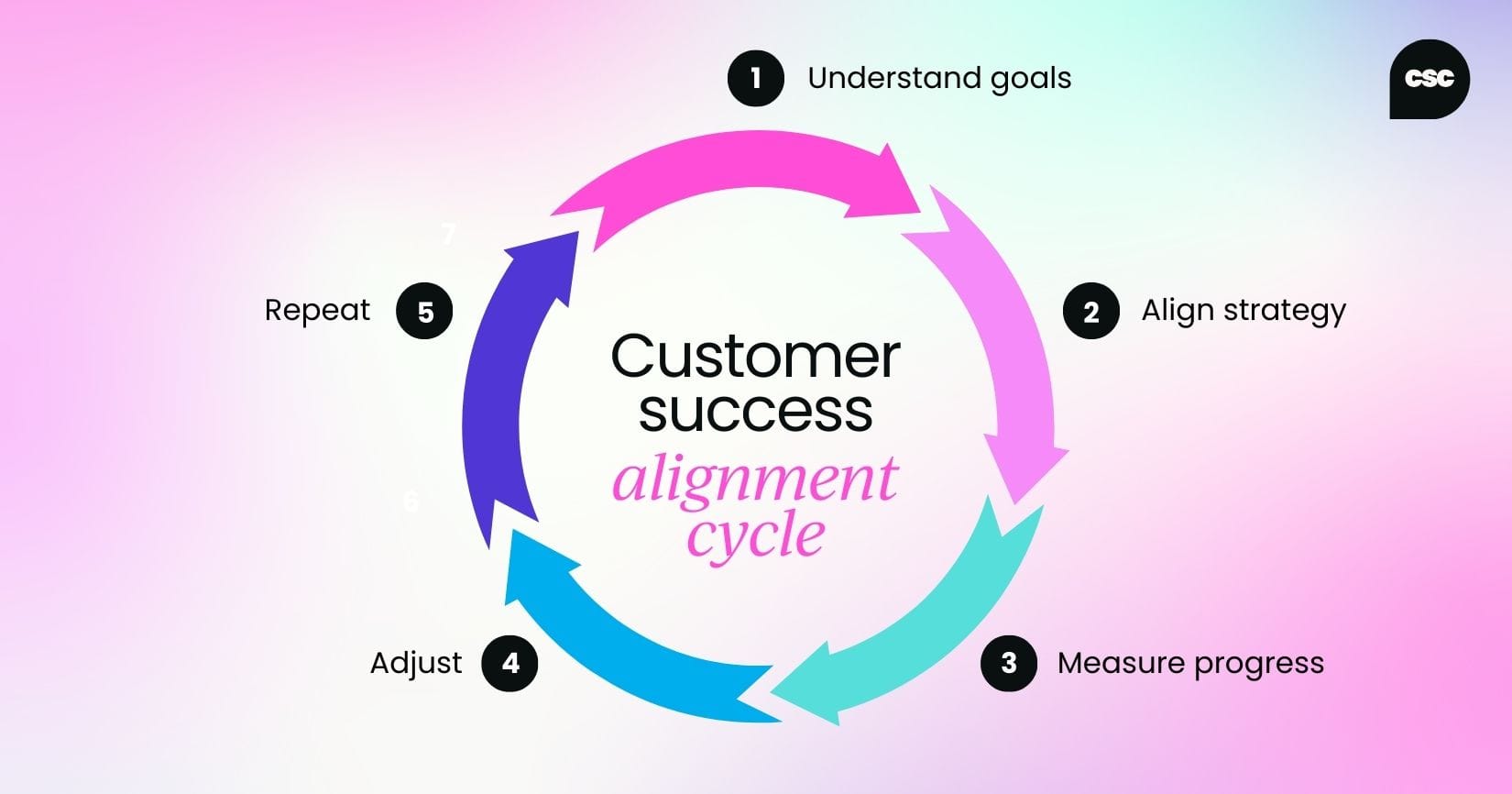
Early in my career, I thought I knew exactly what one customer wanted – simply because I’d read through the account notes. Fast forward six months and I realized their priorities had completely changed; we were still chasing last year’s goals.
That’s why I’ve become an advocate for joint operating models. These are formal agreements that capture shared goals and how we’ll measure progress. When done right, they turn “vendor–client” relationships into true partnerships.
I once collaborated with a customer who, after adopting this approach, saw a 36% year-over-year increase in the outcomes they cared most about.
From alignment to action
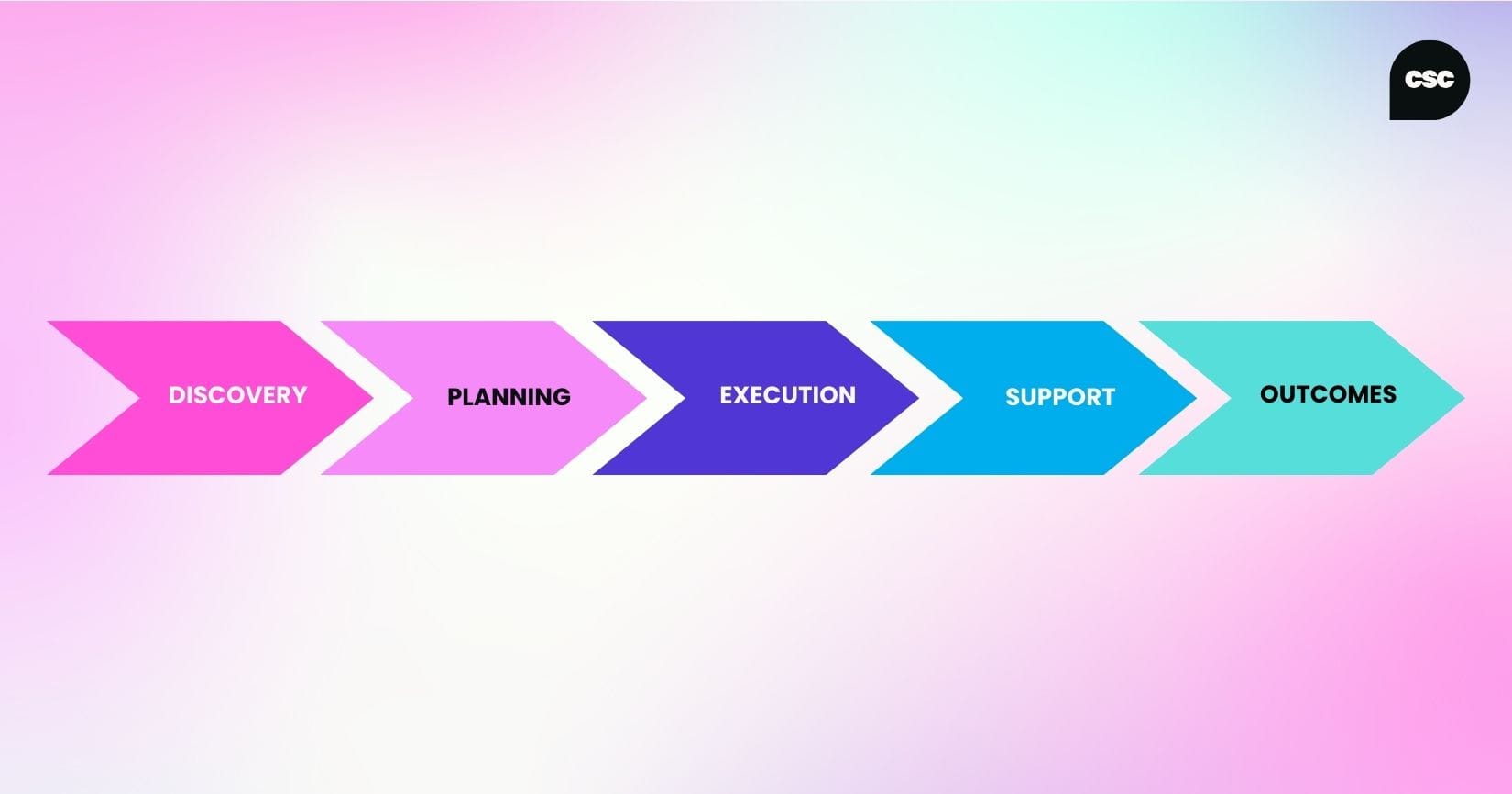
Of course, alignment means little if you can’t execute. This is where strategy turns into action. In recent years, cloud adoption and digital transformation have become some of the biggest levers for customer success.
I’ve guided customers through migrations to cloud providers that fundamentally changed how their businesses ran. The key wasn’t just the technology; it was the structured roadmap, anticipating roadblocks, and making sure the customer never, ever felt like they were navigating it alone.
For substantial changes like this, I’ve found that creating a detailed journey map and supporting it with a “Center of Excellence” (COE) makes all the difference. A COE acts as a central hub for ability, governance, and best practices, ensuring everyone stays aligned and consistent. I’ve seen COEs start small – just a couple of passionate people – and grow into the backbone of entire transformation efforts.
Measure what matters
Measuring progress is where the truth shows up. I’ve been part of projects where everyone felt like we were doing great… until the metrics told an entirely different story. I’ve also seen the reverse, where the data looked shaky but qualitative feedback indicated that customers were seeing real value.
That’s why I always recommend blending quantitative KPIs like adoption rates and revenue impact with qualitative feedback from customer conversations.
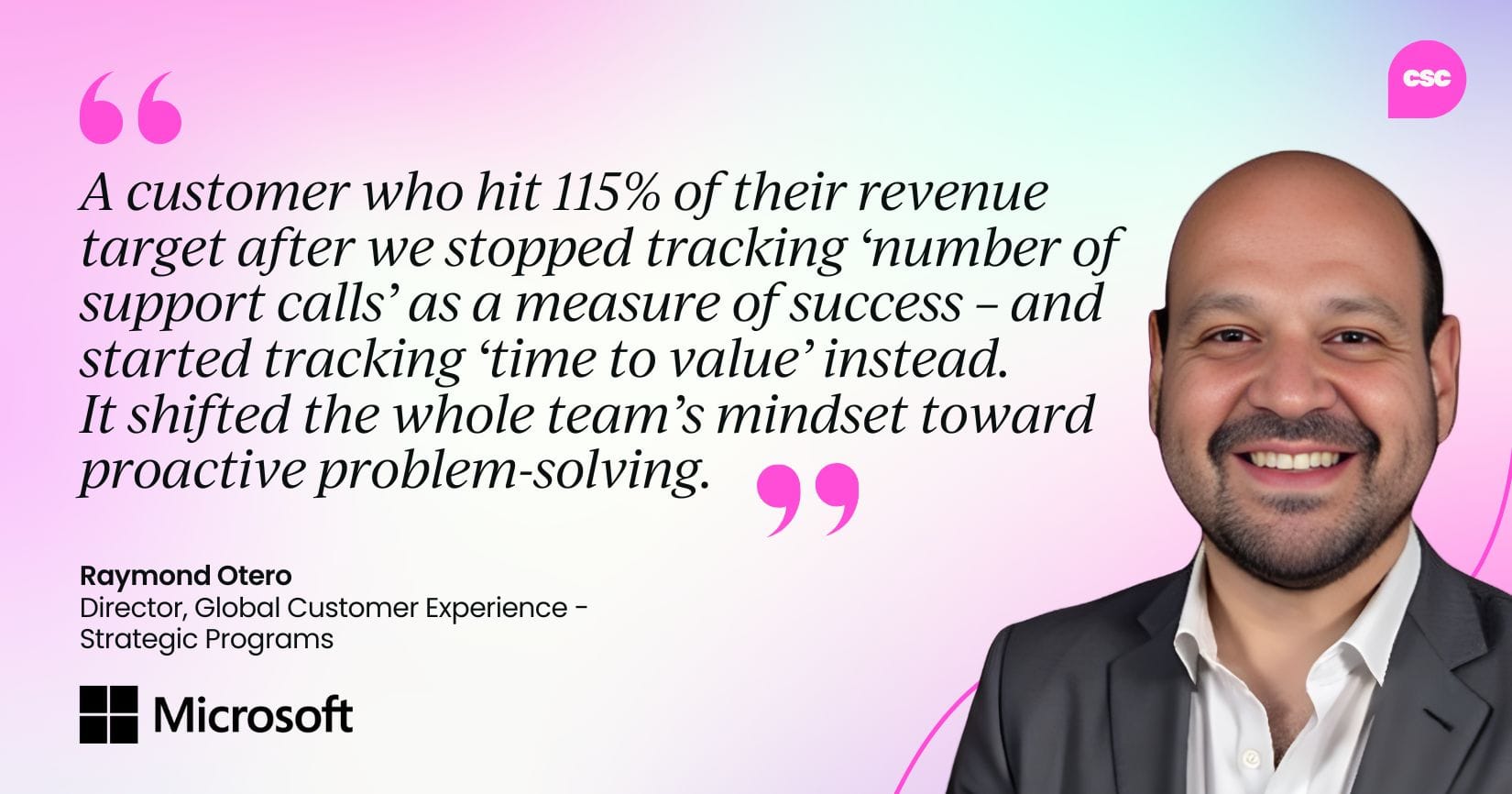
One of my favorite moments was with a customer who hit 115% of their revenue target after we stopped tracking “number of support calls” as a measure of success and started tracking “time to value” instead. It shifted the whole team’s mindset toward proactive problem-solving.
Make continuous improvement a habit
And speaking of problem-solving, customer success can never be a “set it and forget it” operation. The best teams treat it like an ongoing experiment, constantly iterating based on feedback and results.
I’ve had customers tell me, “We love that you listen,” and they didn’t mean it in the generic sense – they meant we took their specific complaint about a clunky reporting dashboard and rolled out a fix within weeks. That kind of responsiveness builds loyalty that no discount ever could.
Use technology wisely
Technology can help here – if it’s the right technology. I’ve seen CRM systems, AI tools, and analytics platforms transform how teams predict needs and personalize experiences.
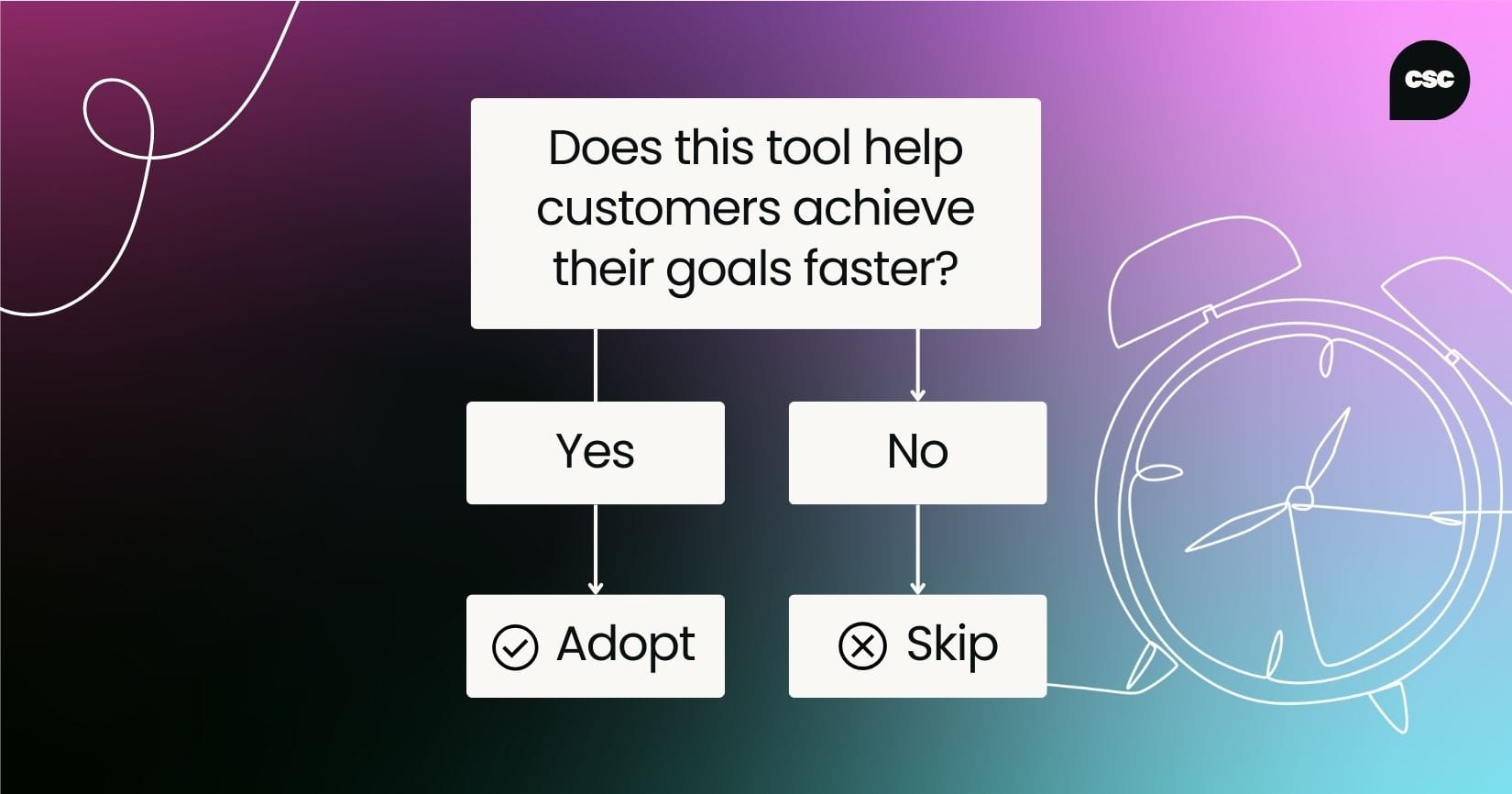
But I’ve also seen tech get in the way when it’s implemented for internal convenience rather than customer benefit. The guiding question I always ask is, “Will this help the customer achieve their goals faster or more effectively?” If the answer’s no, it’s not worth it.
Empower the team
Of course, none of this works without the right team. A skilled, confident, and collaborative customer success team is your biggest competitive advantage.
I’ve been fortunate to collaborate with teams that shared knowledge so freely that it felt like everyone had each other’s customers’ backs. That culture doesn’t happen by accident – it comes from leadership modeling collaboration, creating space for training, and rewarding team wins as much as individual ones.
Spot problems early
I also believe in spotting potential problems before they become full-blown issues. I can think of a time when a customer’s usage data started dipping ever so slightly. There wasn’t a single complaint, but we reached out anyway, and it turned out they were evaluating a competitor’s solution.
By addressing it early, we kept the account and deepened the relationship. Predictive analytics tools can help, but nothing replaces human attentiveness.
Scale without losing the personal touch
Scaling customer success is another challenge altogether. Growth is exciting, but it’s also where cracks start to show if your processes aren’t solid.
I’ve seen companies double their customer base and then struggle because they didn’t have a scalable framework. The solution isn’t to strip away the individualized touch – it’s to standardize the parts that can be standardized while leaving room for customization where it matters.
Look ahead without losing sight of the core goal
Looking ahead, the future of customer success is being shaped by AI, automation, and predictive analytics.
I’ve started to see AI-powered chatbots that manage routine support while freeing up humans for complex, high-value conversations. Predictive tools are getting smarter at finding churn risks before the customer even realizes they’re unhappy.
But here’s the thing: technology will keep evolving, and the tools will change. The fundamental goal – helping customers achieve success – will stay the same.
The bottom line
In the end, making a customer successful is about much more than a checklist. It’s about understanding them, supporting them, and growing with them. It’s about combining strategy with empathy, technology with a human touch, and ambition with trust.
If you focus on building strong relationships, staying aligned with evolving goals, delivering strategic value, measuring what matters, and committing to continuous improvement, you’ll not only have successful customers – you’ll have customers who help you succeed.
And those, in my experience, are the relationships that last.
Your customer success toolkit for lasting impact
If this article resonated with you and you’re ready to go deeper, a CSC membership plan is the perfect next step.
With it, you’ll be able to:
👉 Streamline your work with 90+ ready-made templates and frameworks designed for real-world customer success.
👉 Learn directly from the best – with exclusive articles and 400+ hours of event footage featuring leaders from LinkedIn, HubSpot, and more.
👉 Connect with a private community of customer success experts who share ideas, challenges, and solutions every day.
And that’s only the beginning.
Join today and give yourself (and your customers) the advantage of a proven customer success toolkit.


Become a CSC Insider
Thank you for subscribing
Get exclusive insights, frameworks, and strategies from customer success leaders driving real business impact.
An email has been successfully sent to confirm your subscription.
 Follow us on LinkedIn