








You know that sinking feeling when a customer starts pulling away? The missed meetings, the delayed responses, the sudden interest in "exploring other options."
At Box, we've been there. And we've learned that waiting for these warning signs means you're already playing defense.
Here's the thing about retention: it's not just about keeping customers happy. It's about building a systematic approach to understanding when they're at risk – and doing something about it before it's too late.
After over 20 years in business and 10+ years as a public company, Box has learned a thing or two about what keeps customers around. With 115,000 customers on our platform and 67% of the Fortune 500 trusting us with their content, retention is quite literally everything to us. Let’s get into it.
What early customer behavior patterns reveal about churn risk
Think about your morning routine for a second. You probably wake up, grab coffee, check your phone, maybe kiss your partner goodbye, and then head to work.
But your colleague who you sit next to? They have different mornings. They're waking up their kids, juggling breakfast, and taking the complete opposite route to the office. These patterns very much define us.
The same principle applies to how your customers use your product. At Box, we've discovered that understanding these behavioral patterns – and more importantly, spotting when they change – gives us the earliest possible warning signs of churn risk.
We look for deviations. Anomalies. Those moments when a customer who's been using specific features religiously suddenly... stops. Or when their usage patterns shift dramatically. But don’t reduce these to mere data points. We’ve found them to be much more than that: they're distress signals.
 Dominic Constandi
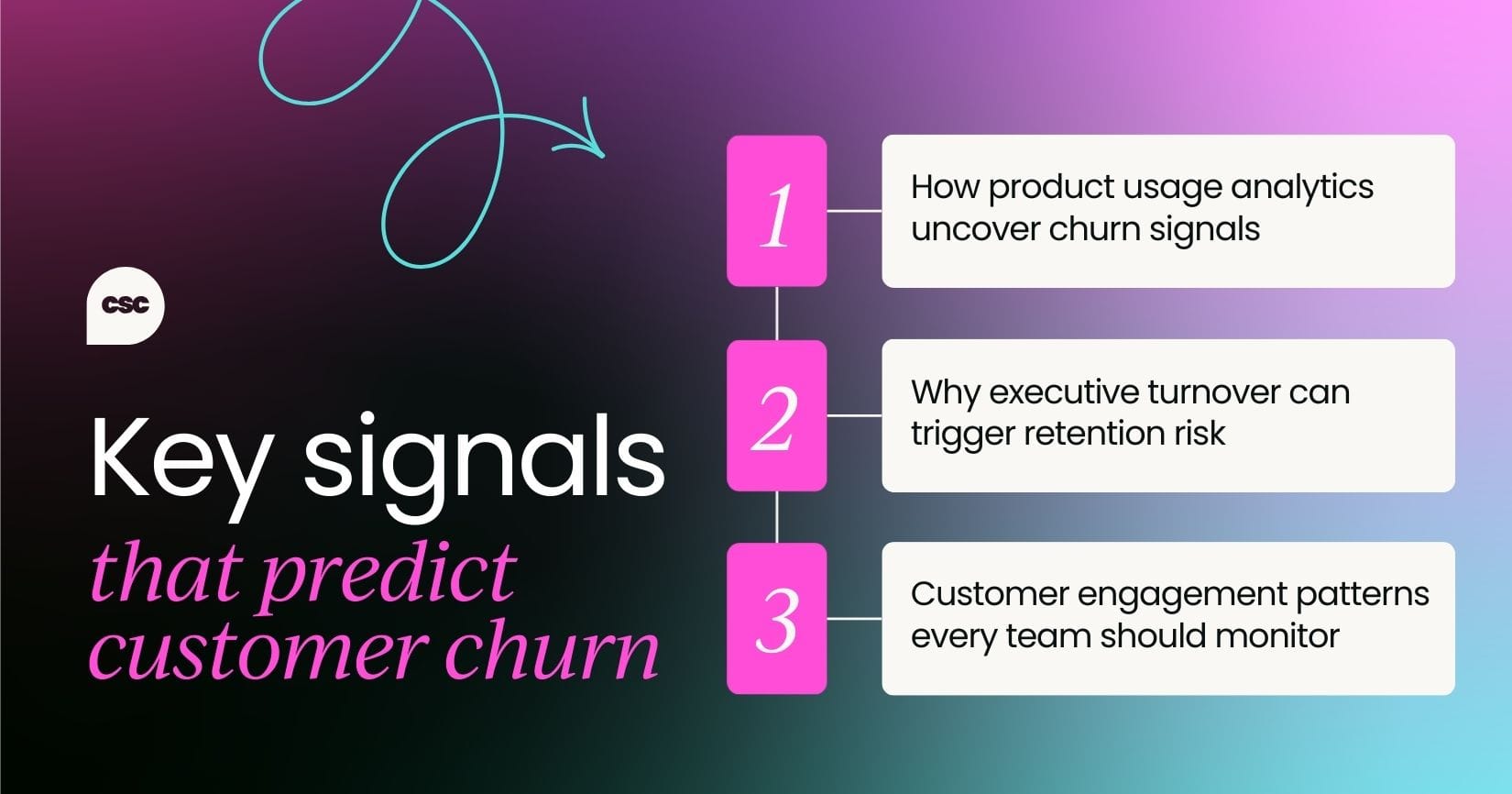
Key signals that predict customer churn
1. How product usage analytics uncover churn signals
We track what features customers use and when that usage changes. If a customer who's been consistently using our collaboration tools suddenly drops off, that's a flag. Not a red alert just yet, but definitely something worth investigating.
2. Why executive turnover can trigger retention risk
This one's huge for us. When a new CIO comes in, they want to make their mark. First thing they look at? The tech stack. "Why are we using this? Can we consolidate? I had great success with this other platform at my last company..." You know the drill. We treat executive turnover as a critical risk factor.
3. Customer engagement patterns every team should monitor
Are they showing up to meetings? Participating in our forums? Attending roundtables? Time is the ultimate currency in business. Where customers spend their time tells you what they value. When they stop giving you that time, you've got a problem.
How Box simplified its churn risk language
Here's where things got interesting at Box. A few years ago, we realized we had a small problem. Ask five different people why a customer was at risk, and you'd get five different answers. No consistency. No accountability. No real clear path forward.
So, we did something radical: we made our CSMs take ownership of it.
Now, I know you're thinking, Of course, CSMs should own retention risk. But ownership without clarity is just blame-shifting. We needed to give them the tools and framework to succeed.
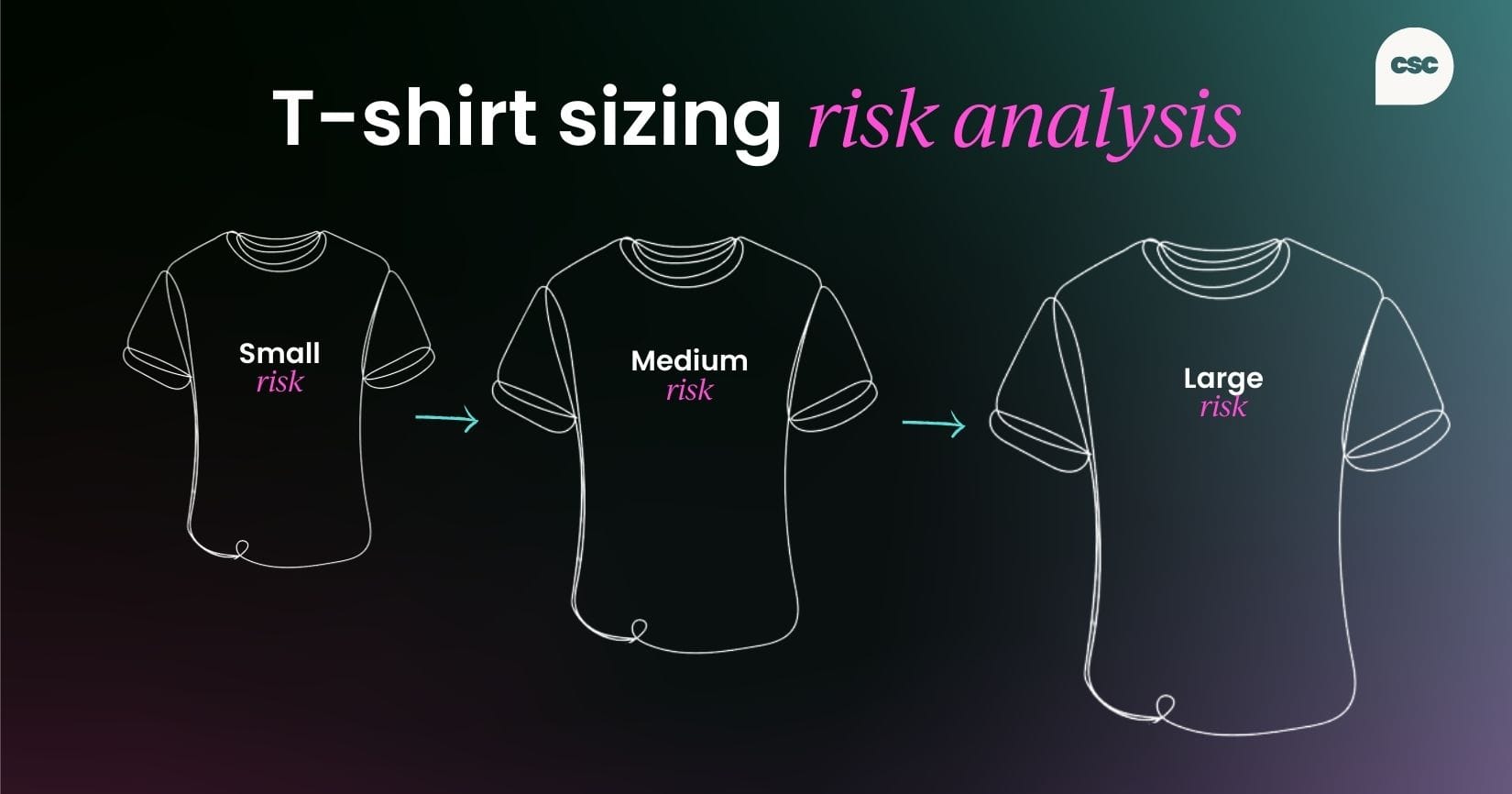
We moved from complex risk calculations (you know, those fancy formulas that nobody really understands) to simple T-shirt sizes: small, medium, large. That's it.
Naturally, this took into account the internal coaching required. Our CSMs went through extensive training first, ensuring everyone understood and agreed on what constituted each risk level; then they cascaded that knowledge to their teams.
The beauty of this system is that it created a common language. When a CSM said a client was a "large risk," everyone from the CEO to the newest sales rep knew exactly what that meant. No interpretation needed.
Making churn risk visible across your organization
We tracked risk reasons systematically in our CRM (Salesforce, for those wondering). Every renewal got tagged with one of the following:
- Risk level
- Specific risk reasons
- Mitigation strategies
Our CSMs updated this manually. Yes, manually. (I wish it were automated – trust me, they wished it too.) But starting somewhere beats waiting for the perfect solution. We kept the requirements minimal: just the essentials that help us understand and act on the risk.
How to structure risk reviews that improve retention accountability
Nobody loves meetings; I get it. But our operational account reviews became crucial for building that culture of accountability.
These aren't your typical "let's review every account" snooze-fests. We organize them by risk reason. All the customers facing value realization issues? They're discussed together. Adoption challenges? Same thing. This approach does several things:
Peer learning opportunities
CSMs shared what's working. That brilliant save strategy your West Coast team developed? Now the East Coast team knows about it, too.
Reduced isolation
Being responsible for an at-risk account feels awful. But knowing you're not alone, that others have faced and solved similar challenges? That's powerful.
Surfaced patterns
When multiple customers face the same issue, it's rarely a coincidence. Maybe there's a product gap. Maybe our onboarding needed work. These reviews help us spot systemic issues.
We pulse these reviews regularly, and – this is key – we include sales leadership. They look at retention risk quarterly in their QBRs. This isn't just a CS problem; it's a company problem.
 Hannah Wesson
Creating a customer save playbook that works
So let’s recap: we identified risk, we created accountability, and we built operational rhythms. Then what? How do you actually save these customers?
The truth is, there's no single playbook that works for every situation. What we built instead was a menu of interventions, each targeted at specific risk types.
Coss-functional retention interventions
- Consulting services for adoption gaps. Sometimes, customers are never fully onboarded. Maybe they skipped that crucial integration, or they never got around to that advanced training. Our consulting team comes in for a targeted "re-boarding" to get them back on track.
- Technical account managers for support frustrations. You know those customers who are tired of submitting tickets into the void? They need a human. Our TAMs come from our product support organization – they know the technical ins and outs, but more importantly, they provide that personal touch some customers crave.
- Value consulting for ROI clarity. We have customers who've been with us so long, they've forgotten why they bought us in the first place. Our value consulting team rebuilds that ROI story, complete with benchmarking data. "Here's what you're achieving. Here's what your peers are doing. Here's what's possible." Sometimes that reminder is all it takes.
- Executive partnerships for strategic alignment. When we see executive turnover or strategic shifts, we match executives. Our COO might connect with theirs. Our CIO shares how we use Box internally. Our CEO reaches out directly when the situation warrants it. These aren't one-off calls – we build long-term relationships at the executive level.
 Grace Gupta
Engaging end users to drive adoption and lower churn
Here's a challenge we face constantly: gatekeepers. That IT admin or application owner who insists, "Don't bother my users. I'll handle all communication."
But those users often hold the key to retention. They're the ones who could benefit from our AI features. They're the ones struggling with workflows we could solve.
So we've gotten creative. In-app messaging. Targeted email campaigns. We go around the gatekeepers (respectfully) to reach end users directly. When those users start asking their IT teams, "Hey, why aren't we using Box AI? I heard it's included in our plan," suddenly, those gatekeepers become champions for adoption.
How to measure retention success and improvement over time
Has this been a complete transformation overnight? No. But the progress is real and measurable.
Last fiscal year, we saw a significant impact, especially with our largest enterprise customers. When you're talking multimillion-dollar contracts, every save matters. And our sales teams, finance teams, and ops teams all feel the impact.
The key learning? Start somewhere. You don't need the perfect system. You need a system that gets better over time.
What’s next for Box: Evolving retention strategy with data and AI
We're not done. Far from it. Here's what we're working on:
Refining our risk signals
Right now, our health scores lean heavily on automated product metrics. The data science team has done brilliant work showing that if customers adopt feature X and feature Y and do behavior Z, they'll retain.
But our CSMs live in the messy reality of customer relationships. We need to find a better balance between quantitative signals and qualitative insights. How do we capture the CSM's gut feeling that something's off? How do we weigh that against the data?
Incorporating external data
We're exploring ways to automatically pull in external signals. Executive changes from ZoomInfo. Company news and press releases. Market dynamics. AI could help us process this unstructured data and flag risks we might otherwise miss.
Evolving with our product strategy
Box just announced major new products and capabilities at our conference. As our platform evolves, so must our retention strategies. Which features truly drive stickiness? Is it integrations with other systems? Is it our AI capabilities? We need to continually reassess and adjust.
Getting more real-time
Some of our risk signals already trigger immediate Slack alerts to CSMs. API usage drops? They know instantly. But we want this across more indicators. The faster we act, the better our chances of success.
We're also exploring A/B testing for digital interventions. Which in-app messages drive action? Which email campaigns actually change behavior?

Why customer retention is the most valuable revenue driver
Here's what it all comes down to: in customer success, we're accountable for revenue. Not just any revenue – the most valuable revenue your company has. A customer who's been with you for 10 years? That renewal is worth far more than a new logo you just spent nine months chasing.
Every dollar from an existing customer costs less to acquire, has higher margins, and compounds in value over time. That's why retention isn't just a metric – it's the metric.
Sure, talking about churn isn't necessarily the sexiest part of customer success – we'd all rather focus on growth and expansion! But retention is the foundation on which everything else is built. Without customers, there's no success to manage.
Key takeaways for building your own retention playbook
Looking to build something similar at your organization? Here's what I'd recommend:
- Start with clear definitions. Before you do anything else, align on what risk means, how you'll measure it, and who owns it.
- Keep it simple. T-shirt sizes beat complex formulas. Common language beats perfect precision.
- Build accountability gradually. Enable managers first, then cascade to teams. Make it part of your operational rhythm.
- Think cross-functionally from day one. CS can't solve retention alone. You need product, support, consulting, executives – everyone aligned around keeping customers.
- Measure everything, but start somewhere. Perfect data tomorrow won't save the customer you're losing today.
- Make risk visible. If leadership isn't looking at retention risk regularly, you're fighting with one hand tied behind your back.
- Invest in the save, not just the close. The resources you put toward retention pay dividends far beyond any new business investment.
The journey to building a comprehensive retention strategy isn't easy. It requires organizational commitment, cross-functional alignment, and a willingness to face hard truths about why customers leave.
But here's what I know after years of refining this at Box: every percentage point of improved retention translates directly to revenue growth. Every saved customer is a victory not just for CS, but for the entire company.
So start where you are. Use what you have. Do what you can. Because in the end, the customers you keep are the ones that keep you in business.
This article is based on Claire's talk at Customer Success Summit Chicago 2024.
Turn retention theory into real results
You’ve just learned what great retention looks like... now learn how to actually do it.
Customer Retention Certified: Masters gives you ready-to-use frameworks, metrics, and playbooks you can apply immediately to reduce churn and drive long-term growth.
✅ Practical, expert-led lessons
✅ Real-world case studies from leading CS teams
✅ Lifetime access so you can revisit when it matters most
Learn today. Apply tomorrow.


Become a CSC Insider
Thank you for subscribing
Get exclusive insights, frameworks, and strategies from customer success leaders driving real business impact.
An email has been successfully sent to confirm your subscription.
 Follow us on LinkedIn