












Underperforming is an issue that keeps a lot of customer success (CS) leaders up at night. How do you handle this without tanking the morale of the employee in question – and for its ripple to be felt across your entire team?
I've been there; correction, we've all been there. After years of working through these situations at Culture Amp – where I spent several years as Director of Customer Success before moving on a couple of years ago – I want to share an approach that's become my go-to strategy for dealing with underperformance.
Your secret weapon before the PIP
Here's my number one rule when someone's performance starts slipping: cut them some initial slack. I know that might sound counterintuitive when you're feeling pressure to fix things fast, but hear me out.
The traditional approach usually goes something like this: person does "just okay" for a while, manager gets frustrated, boom – straight to a formal performance improvement plan (PIP). But that's where we often go wrong. There's a massive gap between noticing performance issues and jumping into formal documentation mode.
What we implemented at Culture Amp was an intermediary step that changed everything.
Before even thinking about a PIP, we'd take that person aside and work together on what we called a mutual coaching plan. Not a performance plan, not a warning, a coaching plan. The difference matters more than you might think.
Why mutual coaching plans work where PIPs often fail
Think about the last time someone told you that you were failing at something. How did that feel? Probably not great. Now imagine if instead, someone said, "Hey, let's work together to figure out how to get you where you need to be."
That's the fundamental shift we're talking about here.
When you're dealing with someone who's not hitting their metrics, you absolutely need to share that feedback. But the way you frame it makes all the difference.
With a mutual coaching plan, you're sitting down together and mapping out exactly where the gaps are. Are they missing the mark on one key metric? Both? Something else entirely? The keyword here is "together." You're not dictating; you're collaborating.
The week-by-week breakdown that actually moves the needle
Here's where the rubber meets the road. Once you've identified the performance gaps together, you need to get specific about what happens next. And I mean really specific.
We'd typically set up these coaching plans to run for about a month. Week by week, we'd map out concrete activities – not vague goals like "improve customer satisfaction" but actual, specific actions they could take.
Let me paint you a picture of what this looks like in practice.
What to do with a low-performing Customer Success Manager
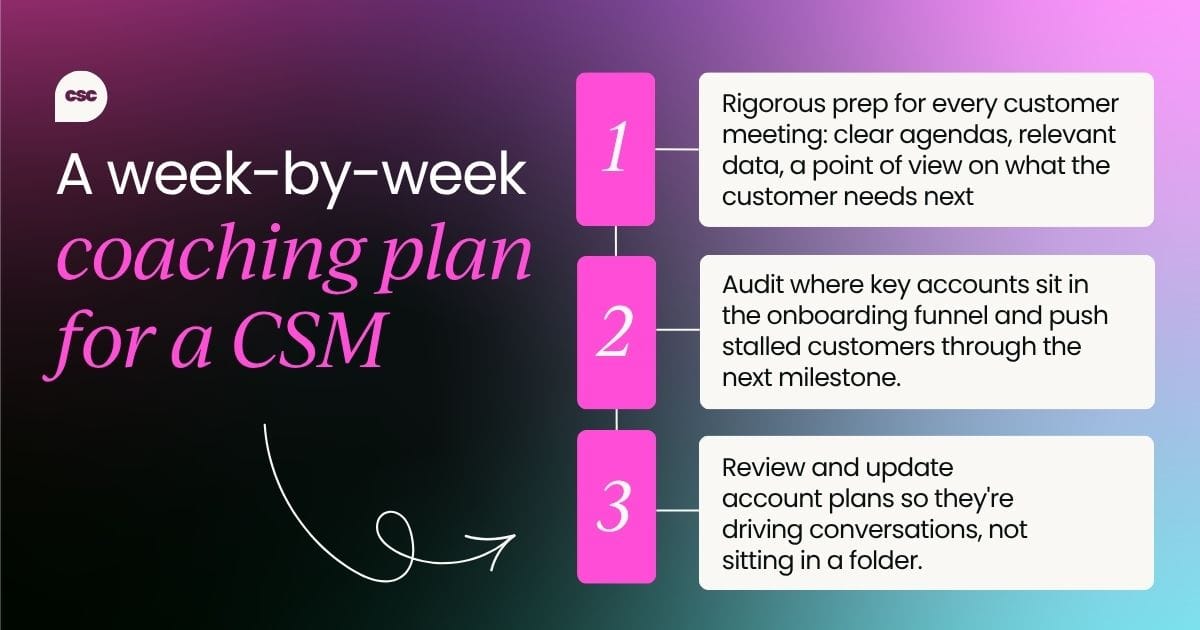
Instead of just telling them to "fix it," you might work together to identify that in week one, they'll focus on rigorous preparation for every customer meeting – clear agendas, relevant data, a point of view on what the customer needs next.
By week two, they'll audit where their key accounts sit in the onboarding funnel and push stalled customers through the next milestone. Week three, they'll review and update their account plans so they're actually driving conversations, not just sitting in a folder.
See the difference? You're giving them a roadmap, not just pointing out that they're lost.
The psychology behind why this approach works
There's something powerful that happens when you approach performance issues as coaching opportunities rather than disciplinary actions. First off, you're preserving the person's dignity. They're not being put on trial; they're being given support.
But it goes deeper than that. When someone knows they're struggling, they're usually already feeling pretty terrible about it. Adding shame to the mix rarely improves performance. What does work? Giving them a clear path forward and the support to walk it.
The mutual aspect is crucial too. When people have input into their own improvement plan, they're far more likely to buy into it. They helped create it, so they own it. That ownership translates directly into effort and results.
 Danielle Martin
What to track during the coaching period
Now, you might be thinking, "This all sounds great, but how do I know if it's actually working?"
Fair question. The beauty of a structured coaching plan is that it gives you clear markers to track progress. And the key is to focus on leading indicators rather than lagging ones. Retention rates, for example, will eventually reflect the impact of your coaching – but they're a trailing signal. By the time they move, you've already lost weeks of coaching opportunity.
Instead, anchor on behaviours and inputs you can actually observe and adjust in real time:
- Are they coming to customer meetings prepared – with a clear agenda, the right data, and a view on what the customer needs next?
- Are their account plans being actively progressed and used to drive conversations?
- Are customers moving through the onboarding funnel at the right velocity, or are handoffs stalling?
- Are they engaging with the coaching process – asking for help, completing weekly activities, showing initiative?
These become your early warning signals. If someone's fully engaged with the coaching process but still not seeing results, that tells you something different than if they're not even trying.
 Dan Farley
When coaching isn't enough: Making the tough call
Sometimes, despite your best efforts, the coaching approach doesn't work. Maybe the person isn't engaging with the process. Maybe they're trying hard, but the results just aren't there. Maybe the role has evolved beyond their current capabilities.
This is where having done the coaching plan first becomes invaluable. You've given them every opportunity to succeed. You've been transparent about expectations. You've provided support and clear direction. If it's still not working, you can move forward with a PIP knowing you've done right by both the individual and your team.
The coaching plan also gives you documentation – not in a "covering your bases" way, but in a "here's what we've tried" way. This matters if you eventually need to escalate to a PIP or even termination. You can show that you invested in their success first.
The impact on your broader team
Here's something CS leaders often overlook: how you handle underperformance sends a powerful message to your entire team.
When they see you jumping straight to formal warnings and PIPs, what do they learn? That mistakes aren't tolerated. That struggling means you're out.
But when they see you working with someone through a coaching plan? They learn that this is a place where people are supported. Where growth is possible. Where leaders invest in their people even when things get tough.
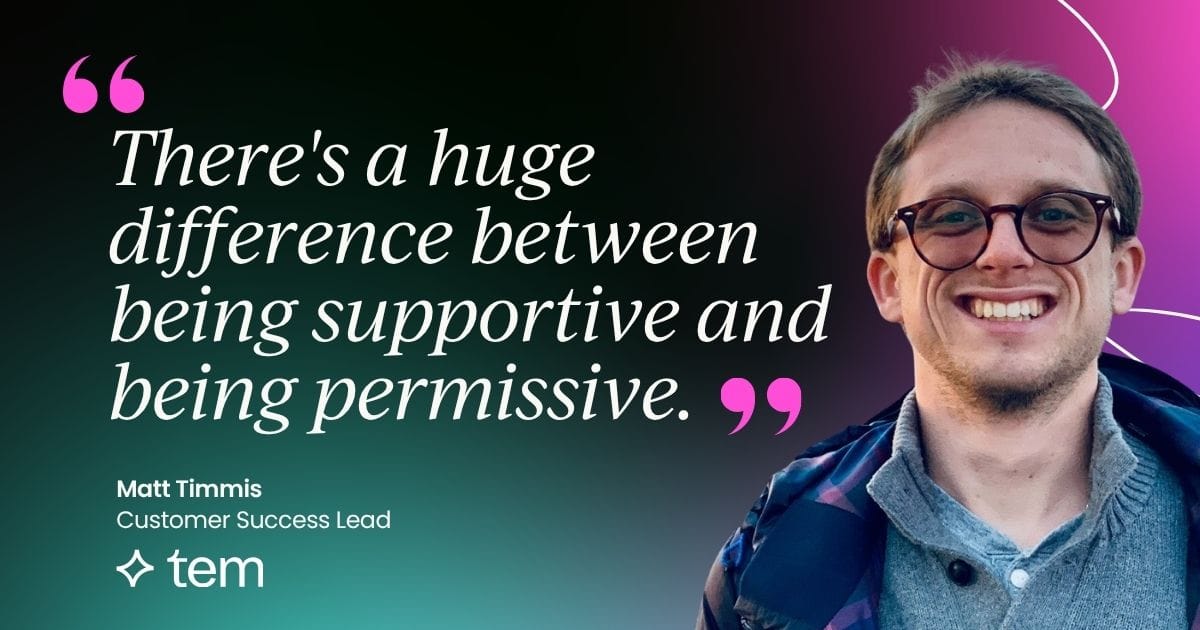
This doesn't mean you're soft on performance. Quite the opposite. You're showing that performance matters so much that you're willing to invest time and energy in helping people improve. There's a huge difference between being supportive and being permissive, and your team will recognize that.
Coaching in the age of AI
I'd add one more thing that feels increasingly relevant: this coaching approach has only become more important as AI tools enter the picture.
It can be tempting for CS leaders to view AI with anxiety – worrying about what it means for their team's roles.
But the leaders who get this right will be the ones who encourage their CSMs to embrace AI intentionally, as a way to dramatically amplify the impact they can have for customers. Better meeting prep, smarter account prioritisation, faster insight from customer data – a CSM who uses these tools well can do things that simply weren't possible before.
That kind of intentional adoption only happens in teams where people feel safe to experiment and grow. Which is exactly the culture a coaching-first approach to underperformance builds.
Practical tips for implementing coaching plans
So you're convinced this approach makes sense. How do you actually put it into practice? Here are some concrete steps that have worked well for me:
1. Start with a conversation, not an ambush
When you first notice performance issues, don't wait for them to compound. Have an informal check-in to understand what might be going on. Sometimes there are external factors you're not aware of.
2. Make the coaching plan truly mutual
This isn't lip service. Sit down with a blank document and build it together. Ask them what support they need. What obstacles are they facing? What do they think would help them improve?
3. Set a clear timeline with checkpoints
A month is usually good – long enough to see real change, short enough to course-correct if needed. Schedule weekly check-ins to discuss progress and adjust as needed.
"Your customer communication needs improvement" is vague and personal. "We need to reduce your average response time from 48 hours to 24 hours" is specific and actionable.
4. Document everything, but keep it collaborative
Share your notes from each meeting. Let them add their own thoughts. This creates a shared record of the journey you're on together.
 Matt Timmins
The long-term impact on team culture
When you consistently use coaching plans before jumping to PIPs, something interesting happens to your team culture. People start to see performance conversations as normal, not scary. They're more likely to ask for help when they're struggling instead of trying to hide it.
You also build a reputation as a leader who invests in people. This pays dividends in retention, engagement, and even recruiting. When your team members talk to their peers in the industry, what story do they tell about how you handle challenges?
The ripple effects extend beyond your immediate team, too. Other departments notice how you handle these situations. HR appreciates the thoughtful approach. Senior leadership sees you building sustainable performance rather than just hitting short-term numbers.
Moving forward with confidence
Look, dealing with underperformance is never easy. It's one of those aspects of leadership that we all wish we could avoid. But it's also an opportunity to show what kind of leader you really are.
The coaching plan approach isn't a magic bullet. It requires time, energy, and emotional investment. Some people won't respond to it, and you'll still need to make tough decisions sometimes. But in my experience, it's the best way to balance the needs of the individual, the team, and the business.
Next time you're faced with an underperforming team member, resist the urge to jump straight to formal processes. Take a breath. Have a conversation. Build a plan together. Give them the support they need to succeed.
Your team is watching how you handle these moments. Show them that this is a place where people are valued, where growth is possible, and where performance truly matters – enough that you'll invest in helping people achieve it.
That's the kind of team culture that not only handles underperformance effectively but prevents a lot of it from happening in the first place. And that's something worth working toward.
This article was inspired by a Q&A session at the end of Matt's talk at Customer Success Summit London 2023. To experience the real McCoy, you can watch Matt's full talk, and others like it, with a Pro+ membership.


Become a CSC Insider
Thank you for subscribing
Get exclusive insights, frameworks, and strategies from customer success leaders driving real business impact.
An email has been successfully sent to confirm your subscription.
 Follow us on LinkedIn




Start the conversation
Become a member of Product Marketing Alliance to start commenting.
Sign up now