





The importance of onboarding
Did you know that $138 billion is actually lost in avoidable churn per year in the US alone? $138 billion.
Did you also know that 23% of all churn is attributed to bad onboarding? That's a worrying statistic, especially as onboarding is nearly always well within our control. (That's assuming that the customer is the right fit for us, so we must continuously iterate and improve to make sure that that is reduced.)
There was a study undertaken by the Harvard Business School that claims that, on average, a 5% increase in customer retention results in a 25% to 95% increase in profits.
On top of that, 65% of a company's business comes from existing customers. So there's a whole load of statistics around this, and it doesn't take away from the fact that actually what we need to do is focus on the customer and the value, and then those statistics will improve as a result.
I wanted to share with you a stat from Gainsight: 39% say the number one reason for churn is not meeting expectations. So let's make sure we know what the customer's expectations are, and that we help to set them from the word go.
But instead of focusing on these statistics around the negative side of things, we're going to focus on the positive, how we can make positive changes, reduce churn, increase the customer lifetime value, etc.
Benefits of great onboarding
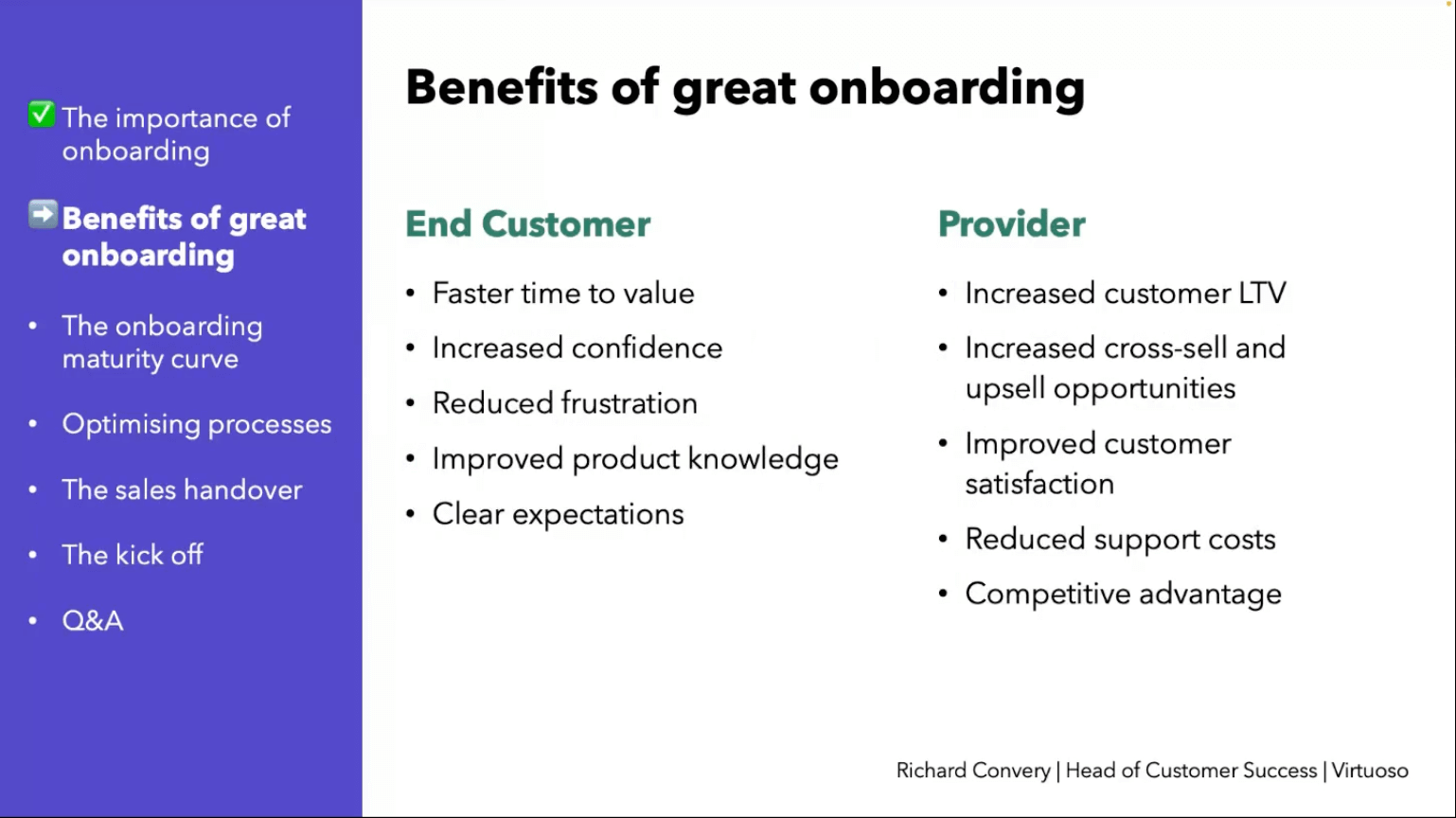
You can see I've got benefits categorized into two categories: the “End Customer”, and the “Provider.”
The "End Customer"
From the customer's perspective, great onboarding results in faster time to value because they're purchasing your tool or service for the value you provide. So the quicker you can get there, the happier the customer is.
They also gain increased confidence in you as a vendor. They might have may have picked you from a long list of vendors, and you want to make sure that you help them feel like they've made the right choice, especially if you’ve got something like a trial period where they can opt out. So after the first one-to-three months, you need to instill that confidence in them.
You're reducing the frustration of the end users.
A smooth and effective onboarding process, which includes training, will enable the customer to go faster, because there's nothing more frustrating than being enthusiastic about a product and wanting to use it, but you've come against blockers and you're not able to achieve what you want to achieve.
So each customer will have improved product knowledge. But that’s not just on the areas that they've purchased.
Think about this, you might have a number of different products within your suite and when the customer purchases one, this presents a fantastic opportunity for you to educate them on other areas of the business. Now those things might not necessarily be right for them right now, but actually educating them on those areas showcases your entire suite, and it plants the seed for upsell. It also gives them a vision of where they can be in the future.
Set clear expectations on both sides. The customer needs to understand what the process is, where they fit into it, and where they can get the most value. You gain a solid understanding of the customer's goals, and you can work to continuously deliver them to the customer.


Become a CSC Insider
Thank you for subscribing
Get exclusive insights, frameworks, and strategies from customer success leaders driving real business impact.
An email has been successfully sent to confirm your subscription.
 Follow us on LinkedIn