








I never planned to work in customer success (CS). I'm sure many of us never did.
I spent six years at university studying Environmental Science and Geospatial Systems, then a further six in the environmental industry, working on contaminated sites, soil and rock logging, groundwater monitoring, and plenty of paperwork.
At that point in my life, I'd never heard of the job title "Customer Success Manager," nor did I know it existed.
But somewhere along the line of managing subcontractors (read: grumpy drillers), translating environmental results to project managers from the construction industry, and working out why our field software was making everyone's life harder, I was already doing it. I just didn't have the title yet.
That's the thing with CS. A lot of us stumble into it from all different industries: consulting, sales, marketing, teaching, engineering. The industry is growing, and with more tech in everyday lives, there's more training, onboarding and contract renewals needed. Most of the best CSMs around built their skills in another industry before they'd ever heard the term "churn rate."
For me, those six years spent digging holes, playing in soil, and chasing hydrocarbons weren't a detour. As it turns out, they were the best possible training I never signed up for.
An inside view: environmental consulting
After a week in the field doing hand augers, direct-push sampling, and groundwater installs, our logs were finally ready to be finalized and exported. We jumped on the software (I won't name it, but every geotech and enviro knows exactly who I'm talking about) and decided to move a column in the report template. Simple enough, right?
Wrong. The template corrupted instantly. Columns everywhere, formatting gone.
Easy fix. Also wrong. That template stayed broken for 3 months. To restore it, you genuinely needed to be a developer, which wasn't exactly in the toolkit of a team of environmental scientists.
The software was frustrating, but I won’t lie – the support was worse. Getting help was harder than the original problem, and when you did get it, it rarely solved anything. I remember thinking: there must be a better way than this.
Now I'm on the other side. I work for software that's actually solved those problems. Being on the CS side means I understand my clients' frustration because I remember it.
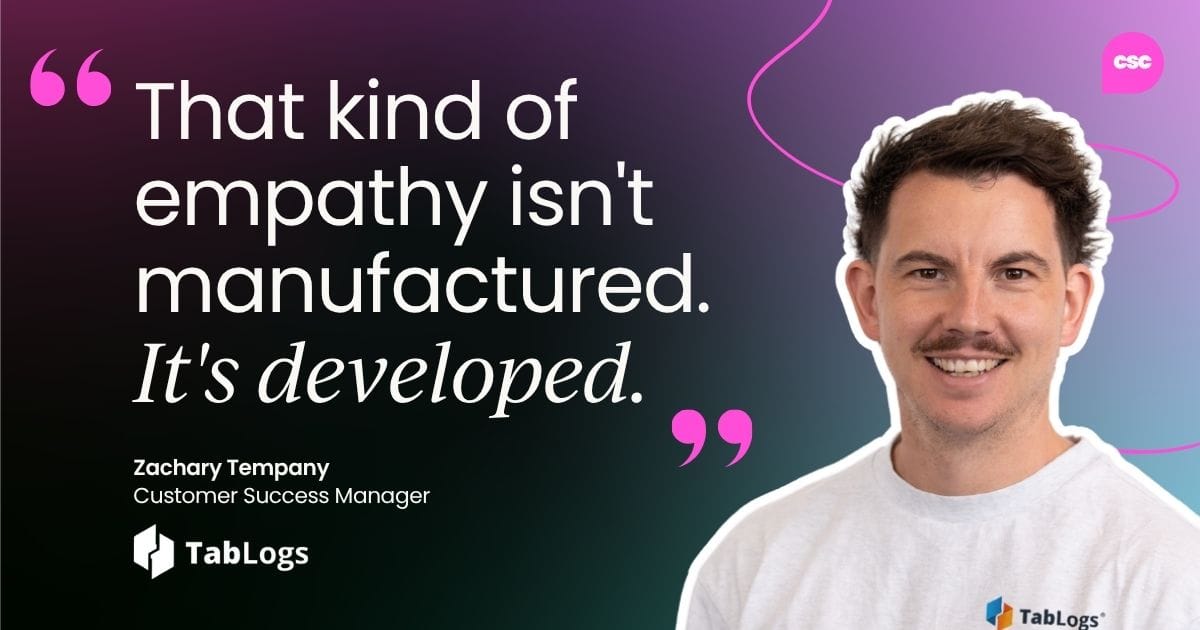
That kind of empathy isn't manufactured. It's developed.
Learning CS the hard way: no playbook, no training
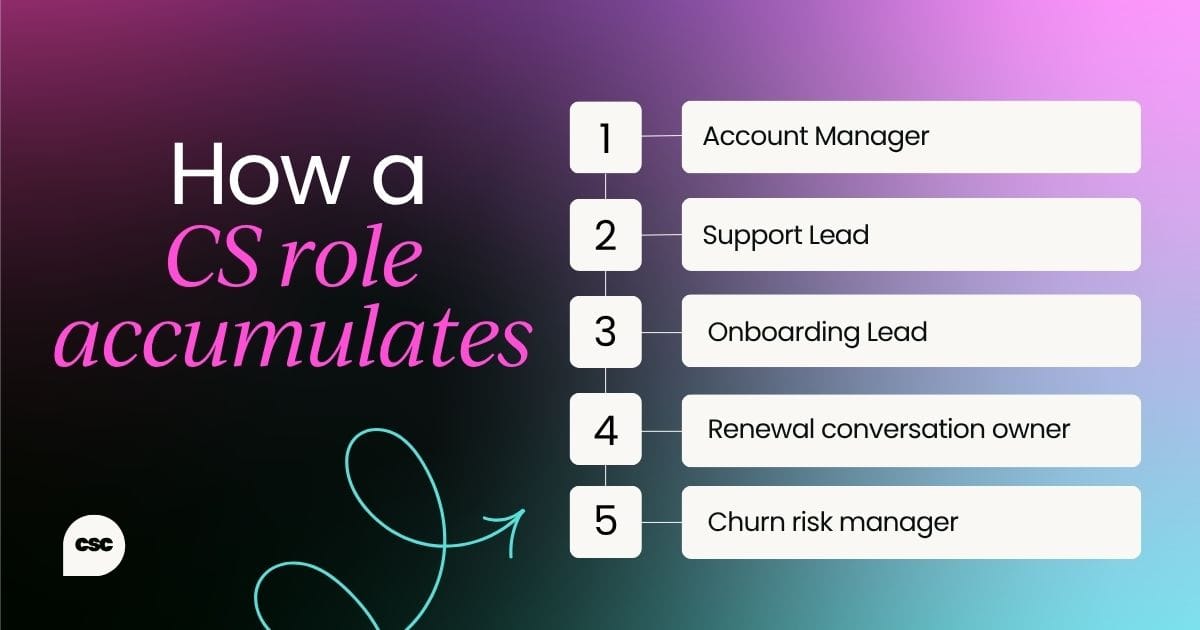
My role morphed quickly. Account manager became support lead, which became onboarding lead, which morphed into renewal conversation owner, and then turned into churn risk manager. There was no job description. It just accumulated.
It wasn't until I was deep in it that I thought I should actually learn what this is. My first book was Donna Weber's Onboarding Matters (2021), and it kicked off my learning properly. The first 90 days of a client's journey are the whole game. Weber notes that "poor onboarding is the leading cause of churn in SaaS," and most companies don't find out until it's too late. That book opened a much bigger can of worms: who else is figuring this out, and what are they learning?
In environmental consulting, we had industry groups, places to create connections, learn from experts, and compare practices. I went looking for the CS equivalent and found Customer Success Collective. After watching my first talk at one of the virtual Customer Success Summits, my immediate reaction was, Oh, people are dealing with the same issues I am.
But back to the job itself.
My first onboarding session as a host was terrifying. I'd watched every sales recording I could find, studied how the sessions were structured, ran through practice runs with our founder, and still felt underprepared. Looking at my sessions now, I struggle to fit everything into an hour. And believe me, that's not a flex, it's just what repetition does.
My early sessions followed a militantly strict script. These days, a few early questions tell me everything: how they log, how their team works and where the frustration is. The session shapes itself from there.
Most of what I've learnt in this role follows the same pattern:
- Show up consistently
- Have the bad sessions and the good ones
- Keep adapting
When you do that long enough, two things happen:
- Your onboarding gets sharper
- Your client relationships get deeper
My go-to opening is personal: I tell them about the broken template, the wasted weeks, the support that went nowhere. I tell them I found TabLogs as a user and loved it so much I asked for a job here. It breaks the ice, but more importantly it says: I'm not selling you something I don't believe in. I've lived the problem you're trying to solve.

Consultancy habits that transferred directly to customer success
We all bring valuable skills from our previous industries. Two in particular, built over six years in environmental work, have done more for my CS practice than anything I've read or watched.
1. Translating complex information for a non-specialist audience
In environmental consulting, you're regularly delivering niche technical results: a new contaminant exceedance, a trend heading in the wrong direction, a site that needs cleaning up at significant cost. Your audience is usually a property developer or construction manager, smart and busy, with no environmental science degree and exactly one question: how bad is it, what does it cost to fix, and when can we start?
You learn quickly that leading with technical detail can lose a room. The key skill is learning the room first, then explaining. I could start an onboarding session going deep into logging standards, database schema, and log configuration logic. That tends to overwhelm. What the client actually needs to know is: how does this help my field crew, and what does the output look like?
2. Patience
In the environment industry, you learn fast that every site is different. The same goes for every SaaS user.
Some clients are borderline developers who know the product better than you do. Others... well, they aren't sure what "CTRL+V" does. Treating them the same is a big mistake. Understanding where someone sits and adapting accordingly isn't just good CS practice; it's basic respect.
As a CSM using the product every day, it's easy to forget what it felt like to open it for the first time. Stay patient, teach every step, explain the why behind it, and get them to first value as quickly as you can. Also, invest in a solid knowledge base with how-to videos. Trust me, your future self will thank you.
What I wish I could tell my field-staff self
One thing worth noting: I work for a startup. Not a multinational like Salesforce, not a team of 15 CSMs who need a product like Gainsight. There are no enterprise playbooks in my library. The skills I have now come from figuring things out in real time, with real clients, getting things wrong before getting them right.
I mention this because a lot of CS content is written from the perspective of scale. If you're working in a small team, it can feel like you're doing it wrong. You're not. You're just doing it differently.
What I've learned at this scale is that relationships are everything. Genuine ones. Understanding what your clients are trying to achieve, understanding the frustrations they came in with, and showing them the path forward. Demo the quick wins early. Establish first value before you talk about extra features. Connect with the user like they matter, because in a startup, they're the reason the doors are still open.
If you're considering a jump from another industry into CS, or you've already made it: you don't need to start from zero. The skills you've built are more transferable than you think. There are new things to learn, of course, but that's true of any new role. What you bring is a perspective that people who've only ever worked in SaaS don't have.
Embrace it, adapt, keep putting yourself out there. The rest will follow.


Become a CSC Insider
Thank you for subscribing
Get exclusive insights, frameworks, and strategies from customer success leaders driving real business impact.
An email has been successfully sent to confirm your subscription.
 Follow us on LinkedIn




Start the conversation
Become a member of Product Marketing Alliance to start commenting.
Sign up now