





At HSBC in the UK, we serve around 15 million customers. My team of about 4,000 people spans 16 sites across four countries, and every one of them is working to deliver highly empathetic, high-touch, compassionate journeys to customers who often need us most.
That's not easy. In fact, it's one of the hardest operational challenges I've worked on.
What I want to share with you is the journey we've been on over the last three years, ever since the Financial Conduct Authority introduced Consumer Duty in 2022. It changed how we think about vulnerability, how we train our people, and how we measure whether we're actually getting it right.

Why the number 100 changed everything
Let's start with a number.
100 is the number of times the words "vulnerability" or "vulnerable customers" appear in the Consumer Duty regulations.
Consumer Duty is a generic regulation that applies across financial services – yet vulnerability is mentioned 100 times. More than the four cross-cutting rules that define Consumer Duty itself.
It runs through everything:
- Governance
- Customer support
- Contact centers and branches
- Foreseeable harm
- Consumer understanding (like letters and documentation)
When we looked at that, we realized we had to do more.
We already had supported banking and specialist teams, but they were being run like any other contact center. And that creates a mismatch.
When you're trying to help people through some of the most difficult moments of their lives, the metric that matters is whether they walked away supported – not how quickly they got off the phone. And yet, that’s what we were optimizing for.
My role as Head of Customer Support was created off the back of that realization.
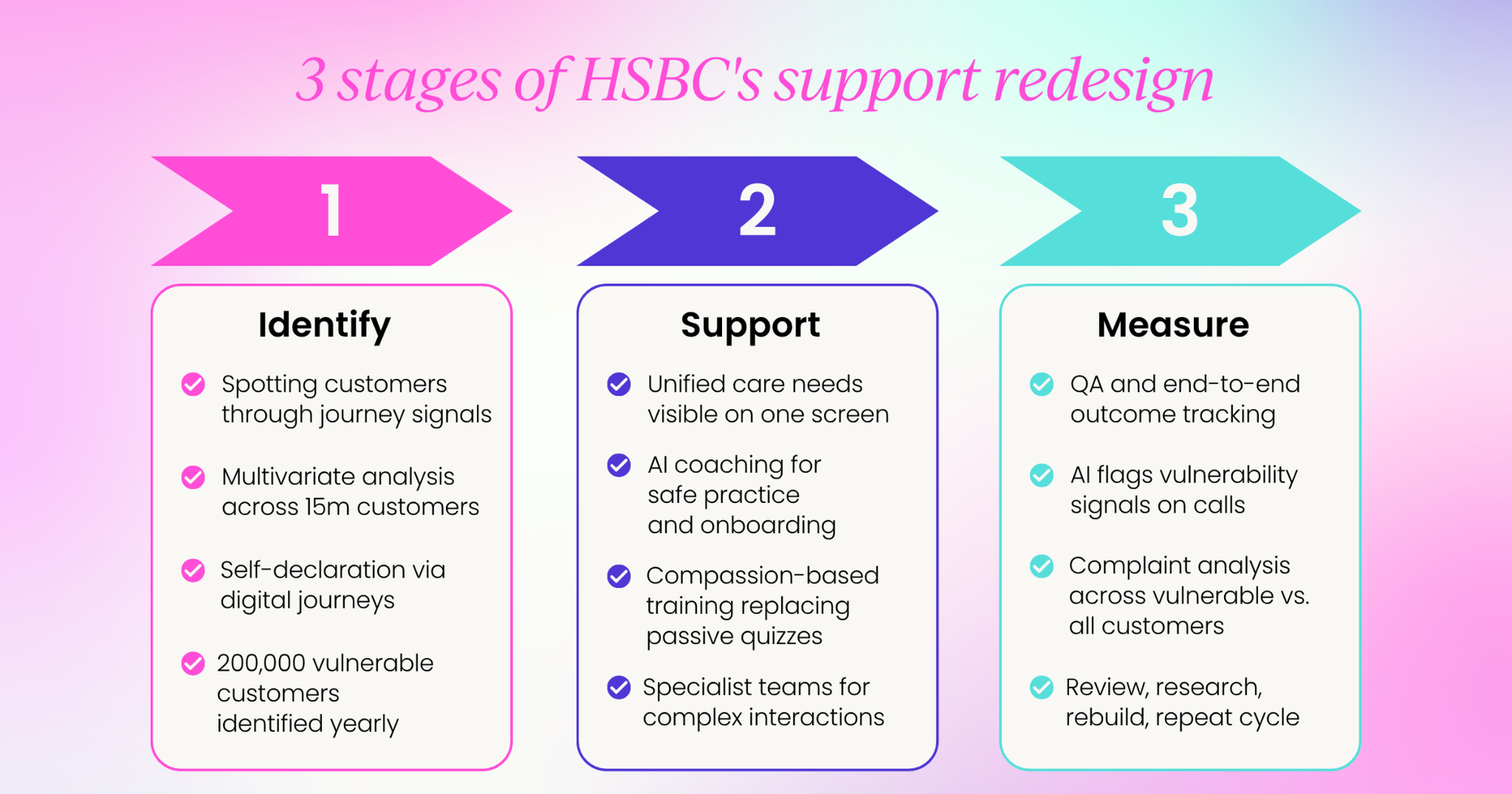
The journey that followed breaks into three parts:
- How we identified the customers who needed us
- How we supported colleagues to support them
- How we measured whether it was working


Become a CSC Insider
Thank you for subscribing
Get exclusive insights, frameworks, and strategies from customer success leaders driving real business impact.
An email has been successfully sent to confirm your subscription.
 Follow us on LinkedIn