









Over the past few years, we’ve all been busy tinkering away with automated workflows and content generated by AI, with much success. But AI Agents? Replicating the sensitivity and empathy required for customer relationships? That’s a whole different ball game.
Here's the issue: most leadership teams are making AI adoption decisions based on outdated assumptions about what customers want.
The conversation around AI in customer support is still shaped by clunky chatbot experiences from years gone by. And there's a chasmic difference between how businesses think customers feel about AI Agents, and how customers actually feel when they experience modern AI capabilities firsthand.
That perception gap is costing businesses opportunities – and Intercom has the data to prove it.
Their new whitepaper, "What customers really think about AI Agents," reveals a measurable psychological shift that occurs when customers see today's AI Agents in action. The research surveyed over 1,000 US consumers and uncovered something striking: customer resistance to AI isn't about AI itself – it's about outdated experiences clouding their expectations.
If your leadership team is hesitant about AI adoption in customer support, or you're struggling to make the business case, this research provides the evidence you need. It shows the real effect of modern AI on the customer experience – not the imagined one.
Let’s dot our I’s and cross our T’s: The whitepaper’s method
Intercom went straight to the horse’s mouth and surveyed over 1,000 of their US consumers, giving them a clear understanding of how modern AI Agents perform in real support scenarios.
Their research uncovered a consistent pattern: when people understand the difference between legacy chatbots and today’s AI capabilities, their expectations shift dramatically.
What consumers think before vs. after they see AI Agents in action
Simply asking what people think about AI Agents doesn’t cut the mustard by our standards. Intercom understands, perhaps better than anyone, the stakes of the AI Agent conversation. So, they measured what happens when that initial perception meets reality.
Let’s unpack what they found. 👇
Before seeing a modern AI Agent in action, sentiment was mixed at best. Only 40% of respondents felt positive about interacting with an AI Agent in customer support, and a full quarter felt negative.
But after watching a short demo of what today’s AI Agents are actually capable of – human-like conversation, fast resolution, and seamless escalation to humans – those numbers shifted sharply.
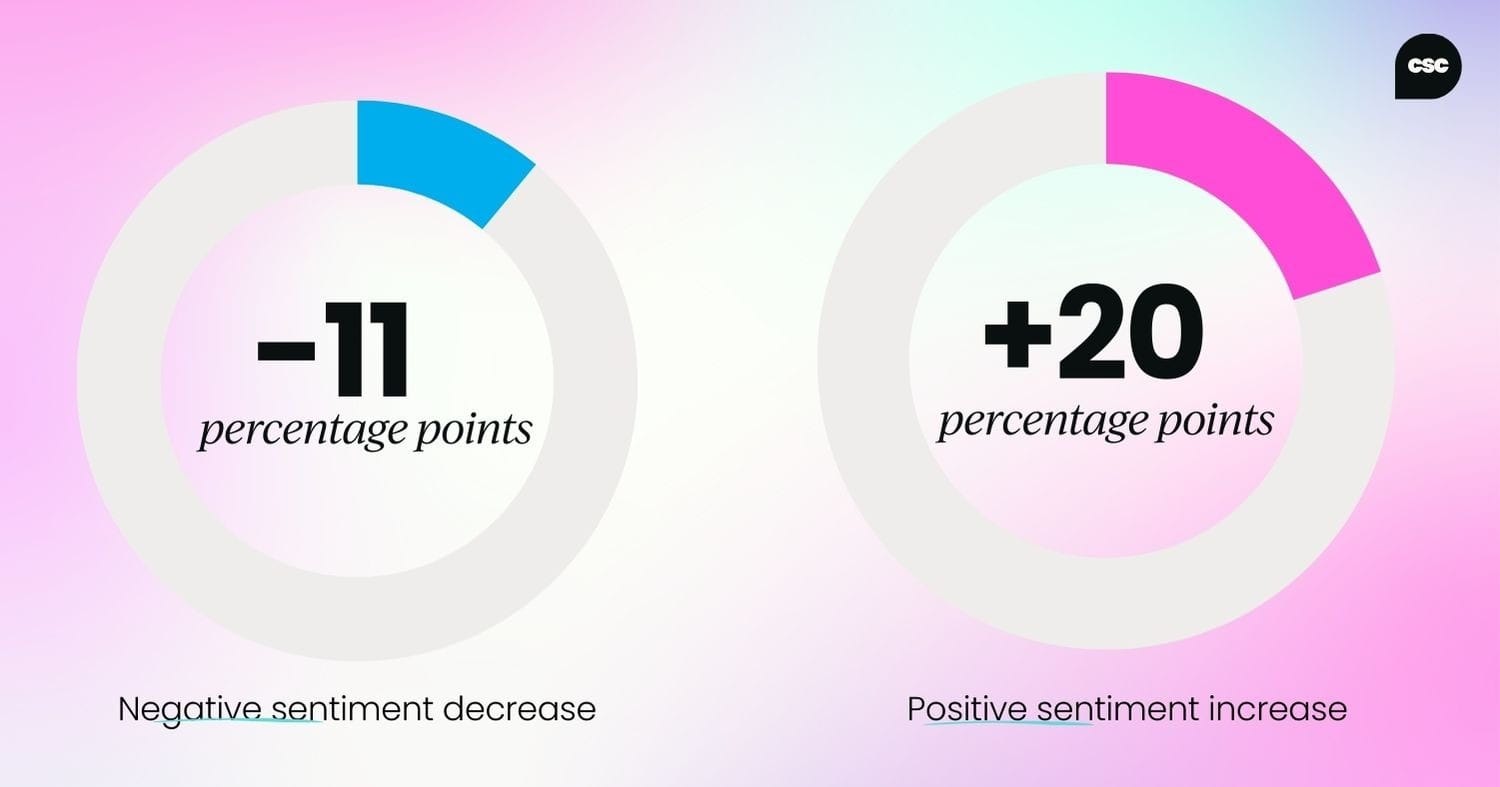
Positive sentiment increased by 20 percentage points, while negative sentiment dropped by 11 points, shrinking to just 14% of total respondents.
Now that… that’s what we call a mindset change. And it raises an important question for any business evaluating AI in customer support: Are customers resistant to AI, or are they reacting to outdated experiences?
Trust isn’t assumed. It’s earned.
You’d be hard-pressed to find someone who isn’t torn by the ethical dilemmas surrounding the use of AI. Whether it’s down to the materials used to train the LLM or the future impact on traditional careers, trust is a whopping blocker for many would-be users.
In fact, trust is often cited as the biggest barrier to AI adoption in customer-facing roles. Full disclosure, the data initially supported that concern.
Before seeing the demo, only 39% of respondents trusted AI Agents to effectively resolve their issues. Almost the same number actively distrusted them.
But once people saw a modern AI Agent in action, trust climbed to 57% – an 18 percentage point increase – while distrust dropped dramatically.
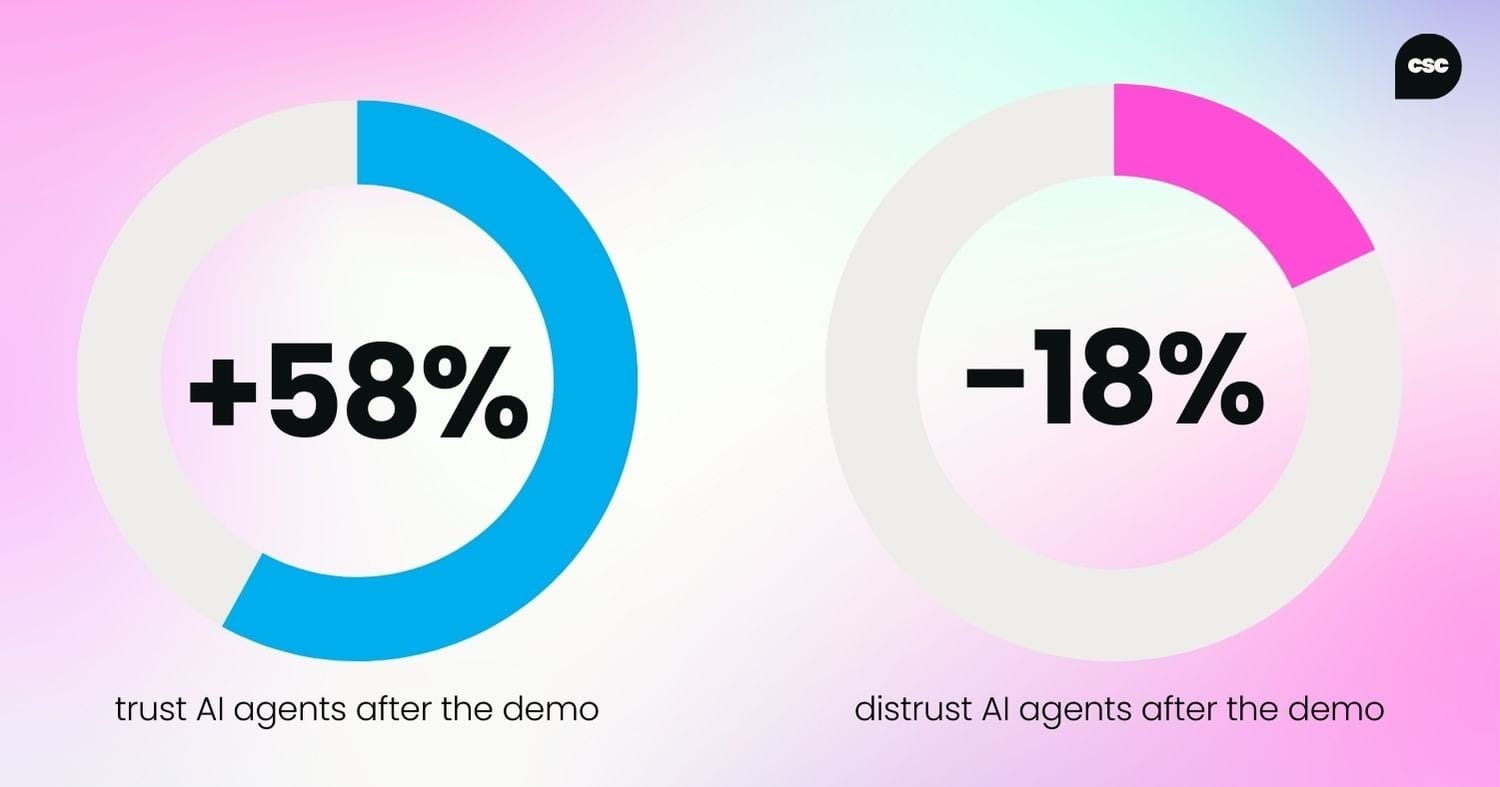
This suggests something crucial: maybe skepticism isn’t fixed. Perhaps it’s conditional.
Intercom crushed the idea that consumers are inherently opposed to AI handling their issues. We can see it’s a matter of confidence: they need to be able to see that it can do the job well.
The whitepaper digs deeper into why that trust shift happens, and what specifically consumers respond to when evaluating AI-driven support.
Faster resolutions aren’t just a business win
Before the demo, only 38% of respondents believed AI would speed up issue resolution. Many were just as likely to think it would slow things down.
After seeing AI Agents in action, 63% expected faster resolutions, a 25 percentage point increase.
Let’s pause on that for a moment; what’s interesting here isn’t just the jump, but what it represents.
It’s clear that speed isn’t something consumers view in isolation. Faster resolution is equated to competence, clarity and reduced effort on their part. It shapes how they evaluate the entire experience.
This is just the tip of the iceberg, though. Intercom's whitepaper explores how AI-driven workflows – not just chat interfaces – heavily influence these expectations, and where consumers believe AI delivers the most value.
What this means for teams planning 2026 and beyond
This research doesn’t argue that AI Agents should replace humans, or that customer service should become fully automated overnight.
What it shows is something more nuanced – and more actionable.
End consumers are far more open to AI than many leaders originally assumed. When AI feels capable, accurate, and human-aware, sentiment improves. Trust grows. Expectations evolve.
For support, CX, and operations leaders, that creates both opportunity and responsibility.
We only scratched the surface with the insights Intercom has uncovered. The full whitepaper breaks down:
- Where sentiment shifts the fastest
- Which expectations matter most to end consumers
- How perception changes once AI is experienced, not imagined
If AI Agents are part of your roadmap – or even a question mark – this is data worth sitting with.
You can download the full whitepaper to explore the complete findings and methodology.


Become a CSC Insider
Thank you for subscribing
Get exclusive insights, frameworks, and strategies from customer success leaders driving real business impact.
An email has been successfully sent to confirm your subscription.
 Follow us on LinkedIn